When a big limb is hanging over your driveway or a whole tree is leaning a little harder than it used to, it’s not something you can ignore. If you’re searching for Tree Services in Greenville, SC, you’re probably staring at the problem from the window and trying to figure out what it could hit. Around Greenville, we see this a lot in tight front yards and backyard fence lines where there’s no room for mistakes. In that moment, getting eyes on the situation and building a safe removal plan beats guessing every time.
- Keep people and pets out of the drop zone until it’s assessed
- Look for what the tree can hit, not just what looks broken
- Plan access for equipment before anyone starts cutting
Quick Homeowner Checklist
Start by walking the area and looking at what the tree could reach if it fails, not just the canopy. In Greenville neighborhoods with short setbacks and driveways tucked close to the house, the real issue is often targets within fall distance. We tell homeowners to think in terms of fall distance and imagine the trunk laid flat in every direction. If that “shadow” hits your roofline, vehicles, HVAC unit, or a neighbor’s fence, treat it as a priority.
Next, take a look at the base and the ground, because that’s where sudden failures often start. After a lot of rain, saturated soil can lose grip on roots, especially on sloped yards and along drainage lines. That’s when root stability can change fast without much warning up in the canopy. If you see fresh soil lifting, new gaps around the trunk, or roots that look like they’re “popping up,” don’t climb a ladder and start trimming.
Finally, think about access and what’s realistically possible without tearing up your property. A fenced backyard near E North St or a narrow gate off a side driveway can limit where trucks and equipment can go. In those tighter setups, controlled lowering is usually how we keep limbs from swinging into gutters, decks, and windows. A little planning up front keeps the job cleaner and keeps you from dealing with yard damage afterward.
- Look up for rooflines, wires, and driveway targets
- Look down for lifting soil, cracks, and exposed roots
- Measure access points like gates, slopes, and tight turns
Signs the Issue Needs Professional Attention
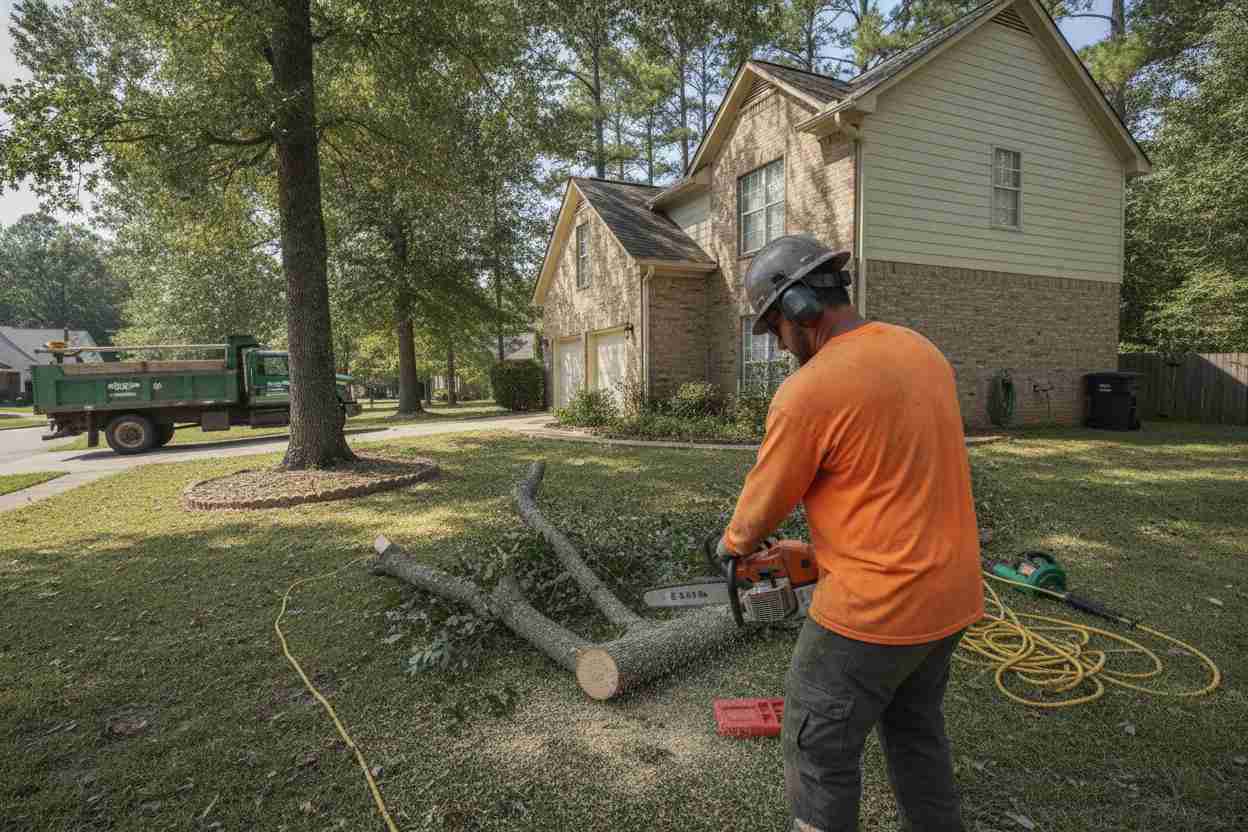
Some tree problems don’t look dramatic until the last second, and that’s what makes them dangerous. When folks call us for Tree Services in Greenville, SC, it’s often because something just looks “off” and they don’t want to be wrong. A lot of failures start with small clues that feel easy to brush off. Our job is to confirm what’s normal, what’s risky, and what needs action right now.
Deadwood is one of the most common hazards, especially when it’s hanging over where people actually live and walk. In the canopy, you’ll see sections with no leaves, brittle twigs, or branches that look gray and dry compared to the rest. That’s where dead limbs become a real threat, because they can break loose on a calm day just from their own weight. Even one big dead lead can dent a car, crack a windshield, or punch through shingles.
Leaning doesn’t always mean a tree is doomed, but a sudden change is a red flag. If the trunk angle shifted after weather and the ground at the base looks disturbed, that movement matters more than the lean itself. We pay close attention to soil heaving because it can mean the root plate is starting to let go. If you notice that near high-traffic roads like Wade Hampton Blvd or along a retaining wall, keep everyone away and get it checked.
- Large limbs hanging over roofs, driveways, or play areas
- New lean, lifted roots, or cracking soil at the base
- Split trunks, dropped branches, or dead sections in the crown
What We Look For During Assessment
A good assessment isn’t a quick glance up and a guess. For Tree Services in Greenville, SC, we look at the tree, the targets, and how we can control every piece that comes down. In older parts of Greenville, trees are often close to homes, fences, and lines, so the plan has to respect what’s underneath as much as what’s overhead. We’d rather spend a few more minutes upfront than create a problem halfway through.
We start with structure and load, because that’s what tells us how the tree behaves under stress. Co-dominant stems, tight unions, and long heavy laterals can hide weak points that only show when the wind hits. We call those structural defects, and they often show up as included bark, old scars, cavities, or a seam that looks like it’s starting to separate. That’s not the kind of thing a random ladder trim fixes.
Then we map the work zone and decide what can be dropped and what must be rigged down. When a tree is near a roof edge, over a fence, or beside a driveway off Laurens Rd, the swing path is just as important as the cut itself. That’s where rigging points and lowering routes keep wood from punching holes in siding or landing on landscaping. We also factor in ground firmness and where equipment can sit without ruts, because a muddy yard changes everything.
- Tree structure, weight distribution, and weak unions
- Targets below like roofs, fences, vehicles, and service drops
- Access limits, drop zones, and controlled lowering needs
How the Right Plan Prevents Guesswork
Tree work is one of those jobs where the cut is quick, but the consequences can stick around for years. When we’re doing Tree Services in Greenville, SC, we don’t start with the saw, we start with control. That means we plan where every limb goes, what gets protected, and how debris will move across the property. When homeowners can see the logic, the stress level drops fast.
If there’s no safe open area to drop wood, we don’t pretend there is. In tight yards near Main St or behind homes where the backyard is boxed in by fences, decks, and sheds, we usually have to dismantle the tree in sections. That’s where sectional removal keeps fences upright and gutters attached, because each piece is lowered under control instead of free-falling. It takes more time, but it’s the difference between a clean job and a costly accident.
We also talk through the not-fun parts that still matter, like noise, staging, and cleanup. Brush has to be dragged, wood has to be stacked or hauled, and surfaces need to be protected if we’re working near patios or decorative beds. That’s why jobsite protection is part of the plan, not a last-minute thought. We’ll explain what’s included, what isn’t, and what might change if we uncover hidden decay or access issues.
- Plan the drop zone and protect targets before cutting
- Use rigging when space is tight or targets are below
- Set clear expectations for debris, wood handling, and cleanup
Types Of Projects We Do
Most people call when there’s an obvious hazard, but we also handle the quieter problems that turn into hazards later. With Tree Services in Greenville, SC, the right approach depends on what you’re trying to protect and what the tree is telling us. Sometimes it’s clearance pruning, sometimes it’s removing a declining tree, and sometimes it’s storm mess that’s blocking access. Either way, we focus on making the property feel normal again.
Pruning isn’t just cutting branches until it “looks better,” and bad pruning causes long-term headaches. If limbs are rubbing, hanging over a roof, or blocking a driveway, the goal is to reduce weight and create clearance without leaving ugly stubs. Good tree trimming considers branch size, balance, and where future growth will go. We’ll explain what we’re taking and why, because you deserve to know what’s changing on your property.
Removal is the right call when a tree can’t be made safe or doesn’t make sense to keep. If it’s dead, split, too close to structures, or actively shifting at the roots, taking it down can be the most practical decision. A proper tree removal plan includes control cuts, rigging when needed, and a cleanup path that doesn’t wreck your yard. We’ll also talk about what happens after, like whether you want the stump handled and how that affects your next steps.
- Hazard pruning for clearance over roofs, driveways, and fences
- Full removals using controlled rigging in tight spaces
- Storm cleanup to restore access and reduce immediate risks
Local Ordinance & Safety Notes
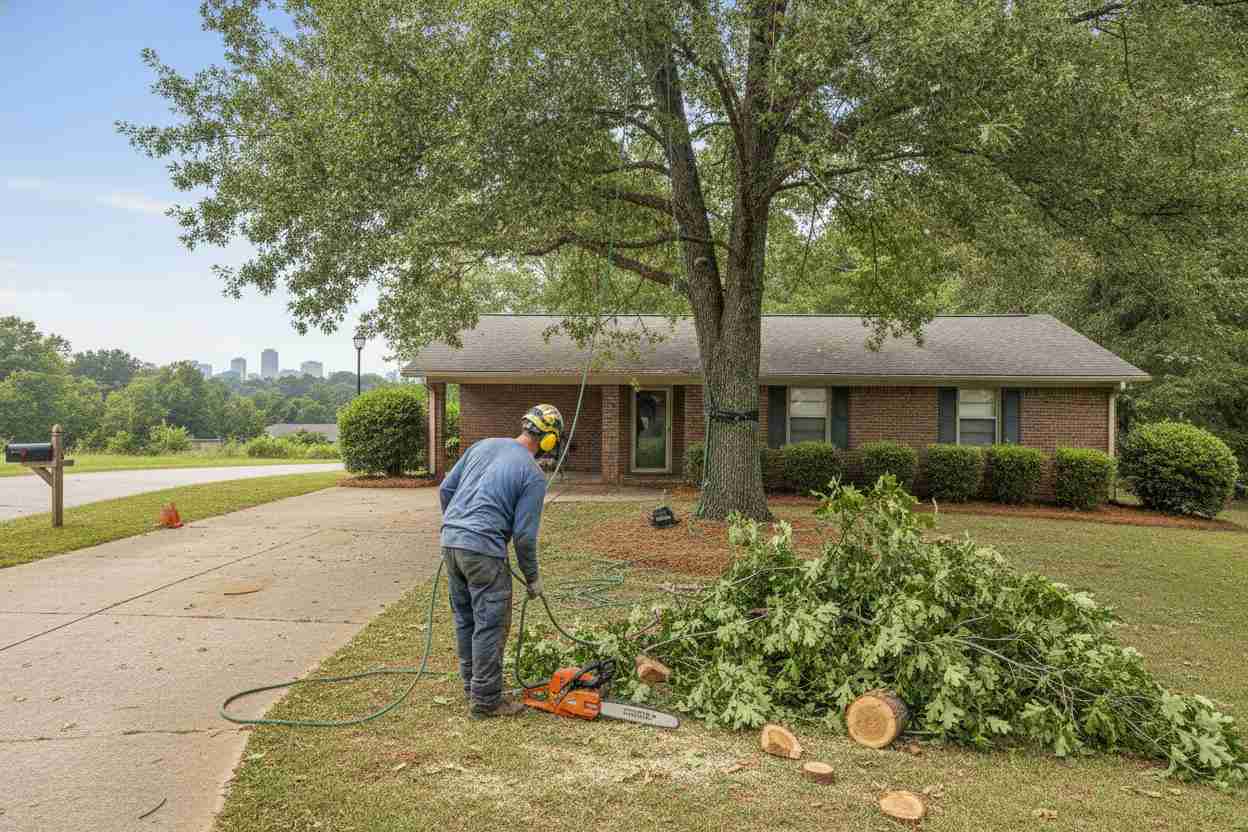
Sometimes a tree problem touches more than just your yard, and that’s where people get surprised. If a tree or large limbs are near sidewalks, street edges, or areas that function like public access, you need to think about how the work impacts other folks. Around Greenville County, we treat that as a public safety situation first, because someone can walk or drive into the area at the wrong time. Our setup focuses on keeping the work zone controlled and predictable, not just getting the tree down.
Power lines change everything, and this is where homeowners can get hurt fast. Even if it looks like a simple branch, the risk goes way up when limbs are near overhead lines or service drops. That’s why utility clearance decisions have to be made carefully, and sometimes the utility provider needs to be involved before any cutting happens. For general guidance on what to do around downed lines and storm hazards, use FEMA’s safety page here: https://www.ready.gov/power-outages.
Access, parking, and traffic flow are also part of the safety picture, especially on busier routes. If you’re near corridors like I-385 ramps or along Pleasantburg Dr where traffic stays steady, we take staging seriously so equipment and debris movement don’t create a new hazard. That’s where a clean work zone setup matters, including where trucks sit, how brush is carried, and how long driveways or sidewalks are affected. We’ll talk through those logistics ahead of time so it doesn’t turn into chaos on the day of service.
- Consider public access if the tree affects sidewalks or street edges
- Treat all nearby lines as energized and keep your distance
- Plan staging so vehicles and pedestrians aren’t put at risk
Why Clear Communication Matters
Most frustration with tree work comes from mismatched expectations, not from the cutting itself. At Drop-a-Top Tree Service, we’ve been at this for 10 years, and we’ve learned that homeowners want straight answers they can understand. We focus on clear scope so you know what’s being cut, what’s staying, and what the yard will look like when we leave. If something is uncertain until we get closer, we’ll say that plainly instead of guessing.
Greenville properties aren’t all set up the same, and that affects the plan more than most people realize. A backyard with a narrow gate off Pelham Rd is a different job than an open lot with easy access, even if the tree looks similar. Those access constraints can affect time on site, equipment choices, and how much rigging is needed. We’ll walk you through options that respect your fence, landscaping, and driveway instead of pretending every job is simple.
We also keep communication simple while the job is happening, because that’s when homeowners get nervous. If we need you to move a car, keep a gate open, or avoid a side door for a bit, we’ll tell you early. That kind of job coordination keeps everyone safe and keeps the workflow moving without surprises. You’ll know what’s next, what’s loud, and when things are wrapping up.
- Explain the plan before the first cut is made
- Set expectations for timing, debris, and cleanup
- Communicate clearly if access or conditions change the approach
If the tree work is done but the stump is still sitting there like a stubborn post, that’s usually the next problem. In a lot of Greenville yards, stumps turn into mower hazards, trip points, and a spot where you can’t regrade or seed cleanly. That’s when stump grinding is the practical finish, because it clears the space without dragging the yard up. If that’s on your list too, check out Stump Grinding in Taylors, SC and line up the next step.
- Old stumps can keep the area uneven and hard to maintain
- Grinding helps you reclaim usable space for landscaping
- Planning stump work early prevents delays on yard repairs
Local Service FAQs
How do you decide between trimming and removal?
We start with what the tree can hit and whether the structure can realistically be improved. In many cases, a focused prune is enough, but if the tree is dead, splitting, or moving at the base, removal may be the safer choice. For Tree Services in Greenville, SC, our goal is always risk reduction without doing unnecessary work. We’ll explain the why behind the recommendation so you can make a confident call.
Can you work in tight yards near fences and homes?
Yes, tight access is normal around Greenville, and it just changes the plan. We’ll often use rigging and controlled lowering so pieces don’t swing into gutters, decks, or fence panels. This is where controlled rigging matters, because it keeps the work predictable even when there’s no drop zone. We’ll walk the yard first and talk through how we’ll protect what’s close.
What should I do if limbs are near power lines?
Keep your distance and don’t try to handle it yourself, even with small branches. If anything is touching or could touch a line when it moves, it’s a serious hazard and may require utility involvement before cutting. For Tree Services in Greenville, SC, we treat line clearance as a safety-first situation and we’ll tell you straight what’s possible and what’s not. Until it’s addressed, keep people out from under it and avoid parking near the area.
What affects the cost and timeline of tree service?
The biggest factors are access, targets below the tree, tree size, and how much rigging is required to control the pieces. A simple open drop can be faster than a tight backyard removal that needs everything lowered carefully. We also look at debris handling, because hauling and chipping can add time, and site conditions like soft ground can affect equipment choices. We’ll explain what’s driving the scope so the estimate makes sense.
If you’re dealing with a risky limb, a sudden lean, or storm leftovers you can’t safely handle, we can help you settle it without the guesswork. We’ll show up, look at the targets, and explain the safest path forward in plain language. When you’re ready to move, schedule Drop-a-Top Tree Service for Tree Services in Greenville, SC and we’ll build a plan that respects your house, your yard, and your peace of mind. That starts with a clear assessment and ends with a clean site.