That stump out in the yard looks harmless until you trip over it, clip it with the mower, or watch ants start marching in and out of the cracks. If you are searching for Stump Grinding in Greenville, SC, you are probably staring at one of those stubborn leftovers right now and thinking, why is this still here. Around Greenville, SC, we see stumps tucked near driveways, patios, and fence lines where they stay in the way for years. The good news is this is a fixable problem, and the right plan keeps your lawn, sidewalks, and landscaping from getting chewed up. stump grinding is usually the cleanest way to get your space back and move on.
Local Conditions That Can Affect Stump Grinding in Greenville, SC
Greenville yards can look simple from the street, but the ground tells a different story once we roll equipment in. Around older neighborhoods and established lots, roots run under walkways, tie into other trees, and snake toward irrigation lines in a hurry. That is why a quick look at the stump is not enough, and root systems are what we think about before the machine ever starts. We also pay attention to access points, because a narrow gate or tight corner can change how we protect turf and how we stage the work. When you call Drop-a-Top Tree Service, we talk through those details upfront so there are no surprises.
Greenville has a mix of flat lawns and sloped spots that shed water toward the street, especially near long driveways or backyards that drop away from the house. If a stump is on a grade, the grinder can leave a low spot that turns into a muddy dish if it is not handled correctly. That is where grade control matters, because a shallow dip today becomes a rut you fight with every rain. We plan the grind depth and cleanup based on how you actually use that area, whether it is a play zone, a garden bed, or just a clean pass for the mower. It is not complicated, but it does take somebody who has done this a lot.
Traffic and parking can be a real factor in town, especially if you are close to downtown corridors like Augusta Street, Woodruff Road, or Laurens Road where space gets tight. We need a safe place for the truck and grinder, and we need a clear path to the stump that does not tear up the yard or bang into fencing. A big part of professional job access is simply thinking ahead about gates, pavers, sprinklers, and where debris will go. If it is a front-yard stump near a sidewalk, we also plan for pedestrians and visibility so the work zone stays controlled. That is how you keep a simple stump job from turning into a headache.
- Access width, gates, and tight corners can change the equipment plan.
- Slopes and drainage affect how deep we grind and how we finish the surface.
- Nearby hardscapes like sidewalks and driveways need extra protection.
Why This Service Matters for Homes in City Name
A stump is not just ugly, it is a daily-use problem that steals usable yard space. Homeowners hit them with mowers, stub toes, and end up building flower beds just to hide the thing. What you are really dealing with is a chunk of wood that keeps decaying, and stump removal by grinding stops it from being the center of your lawn forever. It also makes it easier to re-seed, re-sod, or level the area so water does not pool around it. In City Name, where people actually use their yards, that convenience adds up fast.
Stumps can also invite the kind of pests nobody wants near the house. As the wood softens, it can become a hiding spot for ants, termites, and other insects that treat the stump like a little apartment complex. We cannot promise what is living inside any stump until we expose it, but pest habitat is a real reason many homeowners decide to stop waiting. Grinding takes the bulk of the food source away and helps you keep your property cleaner and easier to maintain. If you are already seeing insect activity, it is smart to handle the stump and then talk with a pest pro if needed.
Then there is the simple safety factor, especially in front yards where kids cut across the grass or visitors step off the driveway. A stump at ankle height is a perfect trip hazard, and it gets worse when grass grows tall around it. That is why yard safety is often the tipping point for scheduling service. If the stump is near a walkway, mailbox area, or the edge of a driveway, removing it is one of those small projects that immediately makes the property feel more finished. You also stop fighting it every time you mow.
- Grinding clears space so mowing and landscaping are not a constant battle.
- Rotting wood can attract insects and hold moisture near your home.
- Removing trip hazards makes walkways and play areas safer.
Signs It May Be Time to Schedule Service
Sometimes the stump is obvious, and sometimes it is the roots that start showing up first. You will see raised lines in the lawn, small cracks in soil, or a mower deck catching on a bump you swear was not there last month. Those surface clues often point to exposed roots that are slowly working their way up as the stump and roots decay. Grinding will not erase every root on the property, but it removes the main stump mass that keeps causing trouble. Once that is gone, you can level and repair the surface more reliably.
If you are noticing mushrooms, soft spots, or a spongey feel around the stump, that is the decay process in full swing. It is not automatically dangerous, but it is messy, and it can sink or crumble underfoot. That is where wood rot becomes more than a cosmetic issue, because it turns the area into a muddy, uneven patch you cannot easily fix with topsoil alone. Grinding lets us remove the worst of the decaying material and leave you with a surface that can be rebuilt. Most homeowners are relieved just to stop smelling that damp, earthy rot near the house after rain.
A lot of people call us after they have already had a tree removed and the stump was left behind for budget reasons. That is normal, but after a few weeks you start realizing how often you walk around it, how it blocks future plans, and how it keeps you from finishing the yard. If you have been putting off Stump Grinding in Greenville, SC because it feels like an extra step, cleanup finishing is the real value here. The job is not just grinding, it is getting the space back to a condition where you can actually use it. That is the difference between a yard that is almost done and a yard that feels complete.
- Your mower hits bumps, and the lawn is starting to heave around the stump.
- The stump is getting soft, smelly, or mushroom growth keeps appearing.
- You want to replant, re-sod, or build, but the stump is in the way.
How We Approach the Work
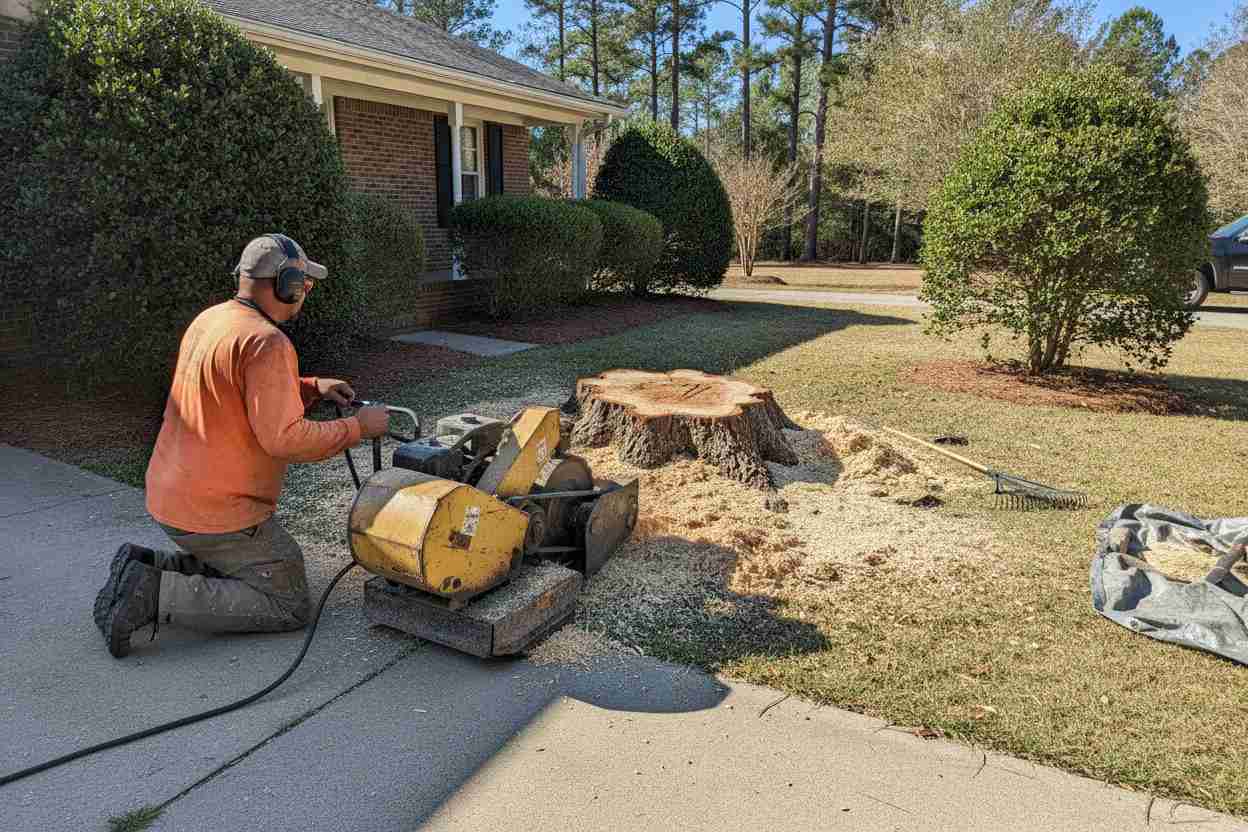
We start by looking at where the stump sits and what is around it, because that tells us how to keep the job clean. Fences, edging, pavers, and utilities all change the approach, and site protection is what prevents collateral damage. We also talk about your end goal, whether you want grass back, a mulch bed, or space for new landscaping. Then we pick the safest access route so we are not tearing ruts through the yard just to reach the stump. That planning is boring, but it is where good work starts.
During grinding, we control depth based on location and what you want to do next with the area. For a lawn area, we often grind below grade so you can backfill and re-seed without a hump showing later. The key is grind depth, because too shallow leaves you fighting sprouts and settling, and too deep can create more cleanup than you actually need. We also keep an eye on the stump flare and major roots, since those are usually what keep causing bumps at the surface. When the stump is near a sidewalk or driveway, we work carefully to avoid scarring concrete or chipping edges.
After the stump is ground, we do not just walk away and leave you with a crater full of chips unless that is what you asked for. Chips can be useful in beds, but they also settle, and the area may need soil added to get it back level. Good debris cleanup means we talk through whether you want chips hauled, spread, or left for you to use, and what the next steps look like for grass. If you are planning to plant a new tree, we will be honest about spacing, because planting right on top of an old stump location can be a struggle. Clear expectations save you time and rework.
- We plan access and protection around hardscapes, landscaping, and tight gates.
- We grind to a depth that matches your plan for grass, beds, or construction.
- We set expectations for chips, backfill, and the best way to finish the spot.
Types Of Projects We Do
Most stump jobs fall into a few common categories, and we handle them all. Some are simple backyard stumps with open access, and others are tight front-yard stumps squeezed between driveway and sidewalk. In each case, stump grinding is about removing the obstacle without turning the rest of your yard into a construction zone. We also work on properties where the stump is close to retaining walls, patios, or landscape borders, where careful positioning matters. If you are not sure your spot is workable, that is exactly what an on-site look is for.
We also get plenty of calls for multiple stumps after a clearing project or a storm removal. When there are several stumps, the job becomes more about sequencing and cleanup so the property is usable again. That is where multi stump planning helps, because we can decide the best order, minimize travel over the lawn, and keep debris organized. Homeowners usually appreciate having one crew handle the whole list instead of piecing it together across different days. It is simply smoother.
Another common situation is stumps in high-traffic areas where you want the yard to look sharp fast. Think near a driveway entrance, near the mailbox, or in the front where it is the first thing you see pulling in off roads like Wade Hampton Boulevard. In those cases, curb appeal is not just a buzzword, it is the difference between a property that looks maintained and one that looks half-finished. We focus on neat edges and a level finish so it blends back in. That little detail makes a big visual difference.
- Single stumps in lawns, beds, or near fences and patios.
- Multiple stumps that need efficient sequencing and consistent cleanup.
- Front-yard stumps where finish quality and appearance matter most.
Related Services That May Also Help
Stump work is often the last step after a tree removal, but sometimes it is also the moment you notice other issues around the yard. You may have low limbs that scrape the roof, deadwood hanging over the driveway, or trees crowding each other and stressing out. That is where tree service experience matters, because we can talk through what is urgent and what can wait. We are not here to pile on work you do not need, but we will point out obvious safety problems. Homeowners usually prefer that honesty over finding out the hard way later.
If the stump came from a tree that was causing shade, rubbing branches, or leaf and limb drop, there is a decent chance the surrounding trees could use attention too. A proper trim can reduce storm risk and stop branches from chewing up shingles or gutters. Good tree trimming is about structure and clearance, not hacking the canopy. We keep it practical and aimed at the problems you actually notice from the ground. When the stump is gone and the yard opens up, that is often when you want the rest of the property to match.
We also help homeowners think through what comes after the grind, because that is where frustration pops up. You might need topsoil brought in, grass repaired, or a plan for where chips should go so they do not smother new seed. Solid lawn restoration guidance keeps you from wasting weekends chasing low spots that settle again. If you want a clean finish, we will tell you what we can do and what may be better handled by a landscaper depending on your goals. Either way, you will know what the next step is.
- Tree trimming to improve clearance, reduce deadwood, and lower risk.
- Tree removal when a hazardous tree is the real issue behind the stump.
- Post-grind planning for backfill, seeding, and surface leveling.
Local Permits That May Apply to Your Project
Most stump grinding on a typical residential property does not require a permit by itself, but rules can change depending on where the stump sits and what else is happening on the project. If you are grinding as part of a bigger renovation, new driveway work, or right-of-way activity near the street, it is worth double-checking the requirements before equipment shows up. The big thing is right of way, because work near sidewalks and street edges can fall under different oversight than a backyard job. We will tell you what we can see from the site conditions, but the final call on permitting is always the local authority.
If the stump is close to a street, drainage feature, or public sidewalk, the city or county may have restrictions on what can be staged or blocked during work. Parking, lane impacts, and pedestrian access can all come into play, especially on busier roads like Pleasantburg Drive or near downtown traffic patterns. That is where site staging becomes more than convenience, because it can affect compliance and safety. We plan to keep access open when possible, and we will be straightforward if the location is too tight to do that safely. If you are in an HOA, you may also have separate rules about work hours and debris handling.
For homeowners who want to confirm local rules, Greenville’s official information pages are the safest place to start because they reflect current guidance and contacts. You can review city resources on permits and related processes through the City of Greenville permits page and then decide if your stump work is tied to something that needs approval. The helpful part is knowing where the line is between simple yard work and regulated right-of-way or construction activity. When in doubt, permit guidance is worth a quick check so you do not get stuck mid-project. We would rather take five minutes to confirm than have you deal with a notice afterward.
- Backyard stump grinding is usually straightforward, but bigger projects may add rules.
- Work near sidewalks or streets may involve right-of-way considerations.
- HOA requirements can affect timing, access, and debris expectations.
Common Questions From Local Homeowners
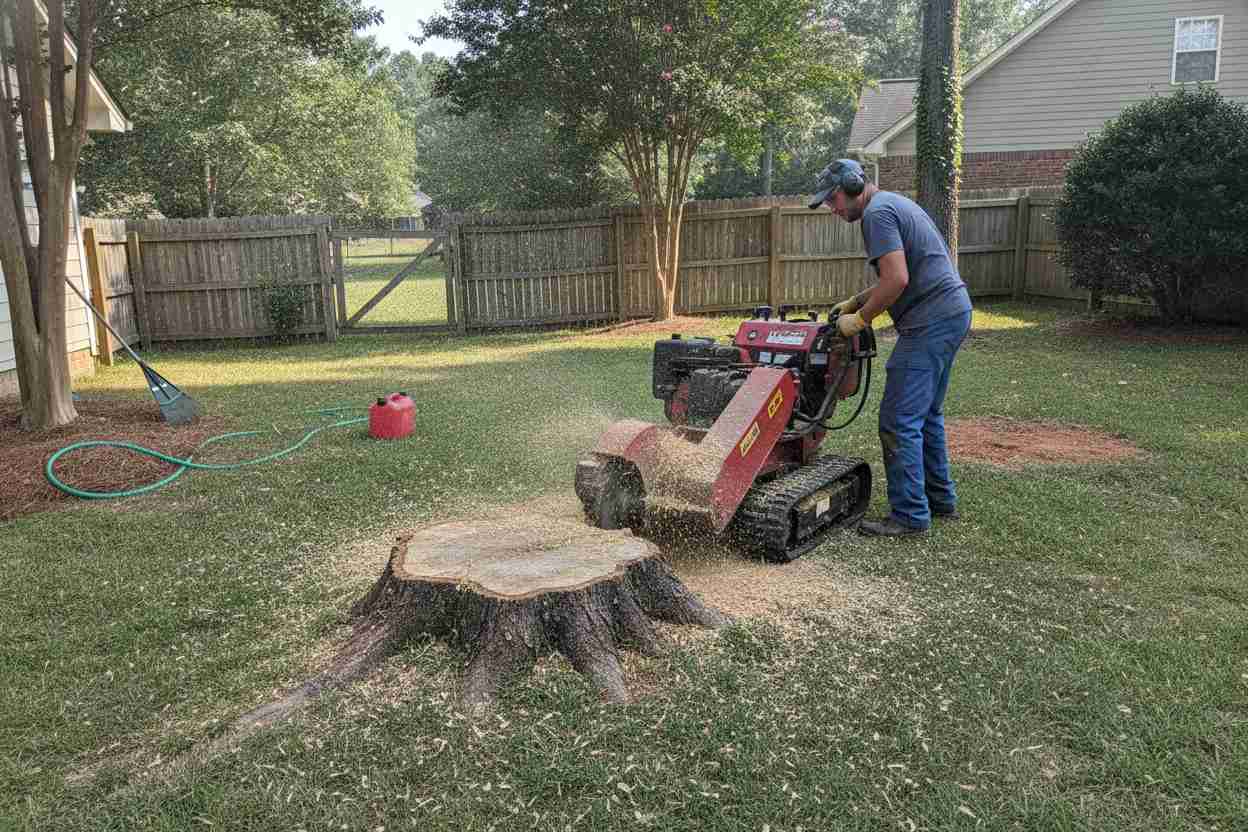
Most folks are not worried about the grinding itself, they are worried about what it does to the rest of the yard. That is fair, because grinders are powerful, and the mess can be real if the crew is careless. We focus on yard damage prevention with a plan for access, a plan for debris, and a plan for what the surface should look like afterward. If you are near high-visibility spots like Falls Park on the Reedy area routes or busy corridors like I-385 exits, we also think through staging so the work zone stays tidy. The goal is to solve the stump problem without creating three new ones.
People also ask about timing and what they should do after we leave. Chips settle, soil settles, and grass needs a little patience, so the finish is a process not a magic trick. The detail that matters is surface finishing, because a stump area that is not leveled right will keep sinking and show up as a low spot later. We will explain what you can expect, what you can do yourself, and what is worth hiring out depending on how perfect you want it. Clear expectations make the whole thing easier.
If you are also thinking about the health and shape of the trees you are keeping, it makes sense to handle that while you are already in planning mode. A lot of Greenville homeowners pair stump work with trimming to open up driveways, reduce rubbing branches, and keep the canopy from getting too heavy. If that is on your list, take a look at Tree Trimming in Taylors, SC and see what a structured trim plan looks like. That kind of planning often prevents future removals and future stumps, which is the real win. The key is preventive trimming that is done for structure instead of just looks.
- Homeowners usually want to know how we protect lawns, fences, and hardscapes.
- Finishing steps matter because chips and soil can settle over time.
- Pairing stump work with trimming can prevent future damage and removals.
Local Service FAQs
How deep do you grind a stump?
Depth depends on where the stump is and what you want to do next with the spot. For most lawn areas, we aim for a below-grade finish so grind depth leaves room to add soil and re-seed without a hump. If the area is going into a mulch bed, we may not need to go as deep. We will talk it through on site so you are not paying for depth you do not need.
Will stump grinding damage my yard or driveway?
It can if the access route is sloppy or the stump is right up against hard surfaces. We plan for property protection by choosing the best path, working carefully near concrete and edging, and managing chips so they do not blast into siding or landscaping. Some turf disturbance is possible in tight areas, and we will be upfront about that before we start. The goal is always to keep the impact small and predictable.
What happens to the wood chips after grinding?
Wood chips are a normal byproduct, and they can be useful if you want them for beds, but they also settle over time. We will set expectations for chip cleanup based on whether you want them hauled away, spread, or left for your use. If you are restoring grass, we usually recommend adding soil on top rather than trying to seed directly into a thick layer of chips. We will explain the simplest path for the finish you want.
Do I need stump grinding if the stump is not bothering me?
If it is truly out of the way, you can leave it, but stumps often become a nuisance later when you change landscaping or start seeing insect activity. The practical reason to schedule Stump Grinding in Greenville, SC is future planning so you are not forced into a rushed decision later. Grinding also removes a common trip hazard and makes mowing easier, which most homeowners appreciate once it is done. We can help you weigh the pros and cons based on where it sits and how you use the yard.
If you are ready to be done stepping around that stump, we can help you handle it cleanly and with a clear plan. Drop-a-Top Tree Service has been working in the area for 10 years, and we have seen just about every awkward access point and tight corner a Greenville yard can throw at you. When you book Stump Grinding in Greenville, SC, we will explain what to expect, what can affect the scope, and what you can do afterward for the best finish. stump grinding is a small job that makes a big difference once the yard is smooth again.