That stump out by the driveway always looks smaller until you clip it with the mower or catch your toe walking to the mailbox. If you’re searching for Stump Grinding in Taylors, SC, you’re probably staring at that exact eyesore right now and wondering how bad the mess will be. Around Taylors, we see stumps left near sidewalks, tight to fences, and right where kids cut across the yard. The good news is that, with the right plan, this is usually a one-visit fix that gets your yard back. We’ll walk you through the process so you know what’s normal and what isn’t, and you’re not gambling on the finish. In the middle of it all, solid stump removal is what makes the whole property feel usable again.
What Quality Looks Like for Stump Grinding in Taylors, SC
Quality stump grinding starts before the machine ever spins up, because the yard tells us what can go wrong. Here in Taylors, a lot of properties have tight access, decorative edging, and old landscaping beds that don’t need to get chewed up just because a stump has to go. We take a minute to walk the area, look for obstacles, and set a work zone so debris stays where it belongs. When the job’s done right, you’re left with a clean footprint that’s ready for seed, sod, or backfill without surprise chunks of wood. The difference you’ll notice most is good yard protection and a finish that doesn’t look like a dig site.
Depth is another place where quality shows up fast, and we don’t guess on that part. If your goal is just mowing without banging the deck, we may not need to grind as deep as a spot you want to replant or level for a small sitting area. We’ll explain what depth changes in terms of time, chip volume, and how the area may settle afterward. The goal is a practical finish that matches your plan, not some bragging-rights number that doesn’t help you. Done properly, sensible grind depth keeps the area stable and keeps you from dealing with a soft dip later.
- We walk the site first and set boundaries so chips and dust stay controlled.
- We match grind depth to your next step, mowing, replanting, or leveling.
- We finish the footprint in a way that’s easy for you to top off and maintain.
Materials, Methods, and Practical Judgment
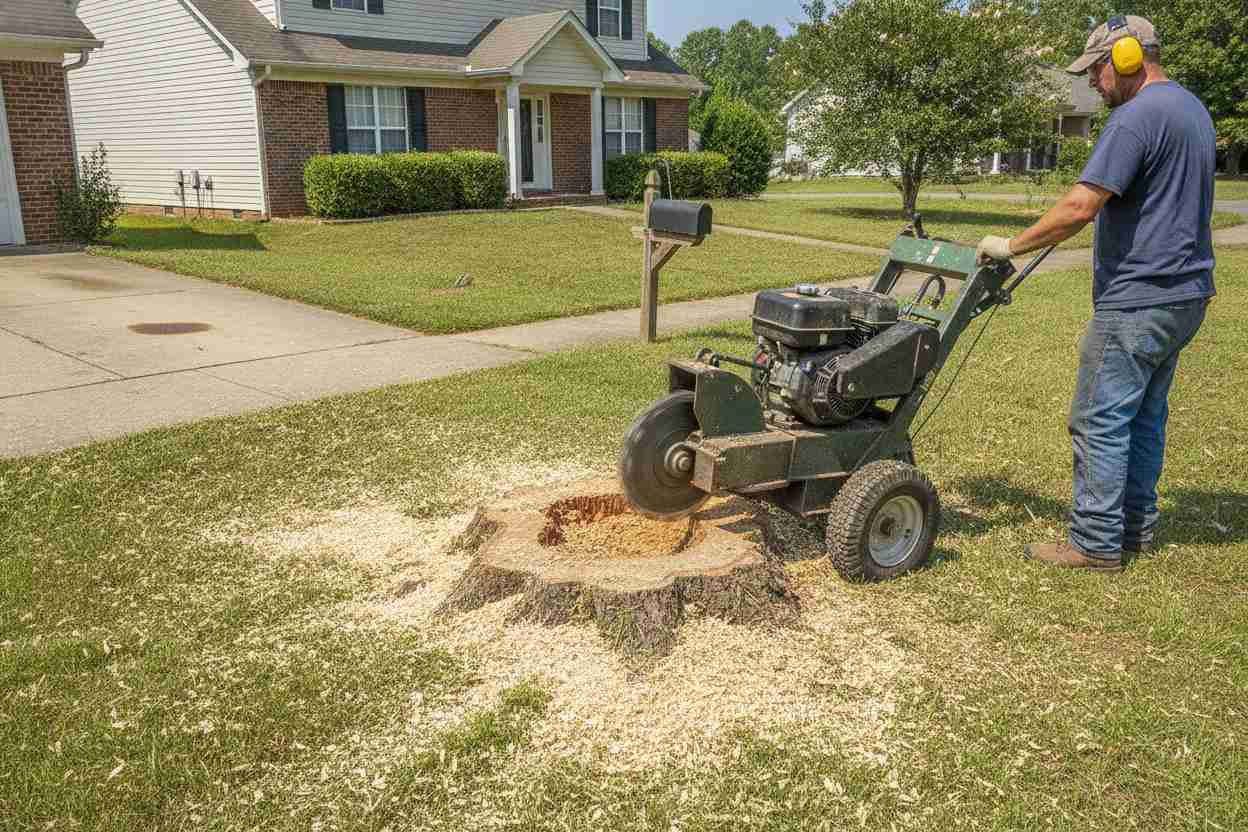
Stump grinding isn’t just chewing wood, it’s dealing with flare roots, rocks, and buried junk that shows up at the worst time. If the stump is near a driveway edge or close to a sidewalk, the soil is often packed and the grinder reacts differently than it does in loose back-yard dirt. We run the machine with a steady, controlled sweep so it cuts clean instead of bouncing and grabbing, which is where turf and borders get torn up. That kind of control is what keeps the job from turning into collateral damage. Using the right grinding equipment and the right pace is what makes it look clean when we leave.
The other part folks don’t think about until it’s everywhere is the chips. Grinding makes a surprising amount of mulch, and if someone isn’t paying attention it ends up in shrubs, against the house, or spread across the lawn like you threw a bag of bedding in a windstorm. We’ll talk through whether you want the chips left to fill the hole, moved to a neat pile, or hauled off depending on the scope. We also keep the blast direction in mind so you’re not picking wood dust out of your flower beds for a week. Clean, planned chip management is part of professional work, not an add-on.
- We adjust technique for packed soil, rocks, and roots that flare wider than expected.
- We plan where chips will land and how they’ll be handled before we start.
- We slow down around concrete, pavers, and edging so we don’t chew up what you paid for.
Common Shortcuts to Avoid
The most common shortcut is grinding only the center and leaving the rim and big surface roots just under the grass. It might look fine for a couple days, then you hit a hard spot with the mower or the area settles into a dip that holds water. We’ve seen a lot of rushed work where the footprint isn’t actually cleaned out, it’s just shaved enough to look better from the porch. Avoiding that means taking the time to chase the edges and the main root flare where it matters. Doing real root grinding saves you from paying twice.
Another shortcut is skipping a real site check near hardscape and utilities. In Taylors, homes along Wade Hampton Blvd, Rutherford Rd, and the neighborhoods branching off those corridors often have lines and services running in ways that aren’t obvious from the surface. Nobody wants a surprise, and we’re not interested in turning a stump job into a repair job. We’ll be straight with you about what we can confirm visually and what needs a locate before anything happens. Basic utility awareness is non-negotiable if you want the work done responsibly.
- Don’t accept a shallow grind that leaves wood just under the turf.
- Don’t grind blind near driveways, sidewalks, fences, and known service paths.
- Don’t ignore the cleanup plan, because chips can smother grass and beds.
How Good Work Protects the Home
Most people call because they’re tired of looking at the stump, but the protection side is real too. A stump and its decaying roots can invite moisture and pests, and it also changes how people move through the yard, which turns into worn paths and tripping hazards. If your yard slopes toward the house, a sloppy finish can create a low spot that holds water right where you don’t want it. We pay attention to the finished shape so you’re not left with a little puddle-maker after the stump’s gone. Smart finishing and basic site grading help your yard drain the way it should.
There’s also the everyday safety part that doesn’t show up until dusk or until leaves cover everything. A stump that sits just proud of the surface is an ankle-twister, and it’s brutal on mower blades and belts. If it’s near the driveway entrance or a walkway, it’s a constant nuisance that never really stops being a problem. Taking it down properly gives you a normal yard again, the kind you can mow and walk without thinking about it. That’s the practical value of real trip hazard removal.
- We reduce settling problems by shaping the area for practical backfill.
- We control debris so siding, windows, and vehicles aren’t in the line of fire.
- We leave a footprint that’s easier to maintain than what was there before.
Types Of Projects We Do
Stumps show up in the most inconvenient spots, and we treat them like real property problems, not a quick spin and go. We handle front-yard stumps where curb appeal matters, back-yard stumps where access is tight, and side-yard stumps squeezed between the house and fence. A lot of Stump Grinding in Taylors, SC comes down to getting equipment in cleanly and protecting the landscaping you’ve already sunk money into. We plan entry and exit so we’re not shredding the same strip of grass just to reach the work area. The big win for homeowners is careful planning for tight access so the yard doesn’t pay the price.
We also do multi-stump cleanups when an old project finally gets finished or a property has several leftover stumps from past removals. Sometimes it’s a row of overgrown shrubs that turned into small trees, sometimes it’s a couple stumps scattered through the back line, and sometimes it’s one big stump plus a few smaller ones you’re tired of mowing around. We’ll tell you what makes sense to bundle into one visit and what might be better staged depending on access and cleanup needs. Coordinating it the right way saves you repeat disruption and repeat mess. Good planning around multiple stumps keeps the yard from being torn up over and over.
- Front-yard stumps near driveways, sidewalks, and street-facing beds.
- Back-yard stumps with gates, fences, play areas, and limited turn-around.
- Multi-stump projects where you want the space leveled and usable again.

Local Rules Most Homeowners Don’t Know About
A lot of stump trouble isn’t just about the stump, it’s about where it sits in relation to the street and your neighbors. When the stump is close to the road edge or sidewalk, the right-of-way can be wider than folks assume, and that matters for how you plan the work and where chips end up. On busier roads like Wade Hampton Blvd, it’s smart to be extra careful about boundaries and not make changes in areas that aren’t clearly yours. We’re careful about discussing what we can see versus what needs confirmation, because assumptions create headaches. Paying attention to property lines keeps a simple grind from turning into a neighbor issue.
If you’re planning to fill, replant, or build up the area afterward, drainage is the quiet rule most homeowners learn the hard way. A stump spot that ends up lower than the surrounding grade can collect water, and that water can move toward a driveway, a sidewalk, or a shared boundary. We watch the slope and talk through what you’re planning so the finished footprint doesn’t become a recurring muddy patch. That’s not us overcomplicating it, that’s us preventing the common aftermath problems. Keeping runoff sensible with basic drainage control protects your yard and keeps peace with the people next door.
Also, anything that disturbs soil near buried services needs a little respect, even if it feels like just wood and dirt. South Carolina’s 811 locate process exists for a reason, and it’s the safest way to reduce the risk of hitting utility lines or service runs before work starts. We’re not here to alarm you, we’re here to keep the job clean and predictable from start to finish. If you need the official place to start, use South Carolina 811 and follow their steps before work near buried lines. Having up-to-date utility locating is one of the simplest ways to prevent a small job from becoming a big one.
- Near streets and sidewalks, confirm boundaries before altering the ground.
- Plan the finish so the spot doesn’t become a permanent low area.
- Use 811 before work near buried utilities or service lines.
What Sets Drop-a-Top Tree Service Apart
We’ve been doing this kind of work for 10 years, and that experience shows up in the small decisions that keep a job smooth. Stump grinding looks simple until the stump is boxed in by landscape blocks, sitting near a fence, or buried in a root mat that grabs the cutter head. We show up with a plan, we ask what you want the area to be used for, and we explain what the finish will realistically look like in your soil and layout. Homeowners relax when they know what’s coming, and we don’t hide the ball on that. The whole job goes better with clear communication from the start.
We also work like we’re the ones who have to mow that yard next week, because that’s the real test. That means controlling debris, being mindful of where equipment travels, and not leaving you with a crater you can’t easily top off. If access is too tight or there’s an obstacle that changes the plan, we’ll tell you up front instead of forcing it and hoping for the best. You shouldn’t have to babysit the crew to protect your own property. Consistent property care is what we build the visit around.
- We explain depth, cleanup, and next steps in plain homeowner language.
- We work carefully around fences, hardscape, and established landscaping.
- We aim for a finished area that’s simple to seed, sod, or level.
Quality and Service Questions
Most homeowners want to know how long it’ll take, how loud it is, and whether the yard will look worse before it looks better. Those are fair questions, and the honest answer depends on stump size, wood type, root spread, and access. If the stump is tucked behind a gate or close to a driveway, setup and movement can take as much thought as the grind itself. We’ll give you a realistic expectation based on what we see, not a guess that sounds good on the spot. Setting honest job timing expectations is part of earning trust.
Another big question is what happens after the stump is ground down, because that’s where people either get a clean finish or a lingering soft spot. Chips can settle, soil can settle, and the area may need a top-off depending on how you plan to use it. We’ll point out what you can do next, whether that’s adding topsoil, tamping, or waiting a bit before final leveling. You’ll also know what signs mean normal settling versus something that needs attention. Practical guidance on post grind steps keeps the result looking good.
- We explain how size and access affect noise, time, and cleanup.
- We talk through chip handling so you know what stays and what goes.
- We give clear next steps for filling, leveling, and restoring the surface.
If you’ve got another property and want to compare how the process should look elsewhere, take a look at our page for Stump Grinding in Hendersonville, NC. It lays out the same practical expectations so you can spot the difference between a quick shave and a proper grind. The main thing is knowing what questions to ask about depth, cleanup, and what you’ll be left to finish. That way you don’t end up paying for shallow grinding that leaves you with the same nuisance later. Either way, the goal is the same: a safe, mowable yard you can actually use.
Local Service FAQs
How deep do you grind a stump?
Depth depends on what you want to do with the area afterward, like mowing, replanting, or leveling for a feature. We’ll talk through the goal first, then recommend a practical depth that removes the nuisance without creating unnecessary disturbance. For Stump Grinding in Taylors, SC, we also factor in access and what the surrounding grade is doing so you don’t end up with a low spot. The right grind depth is the one that matches your plan and leaves a finish you can maintain.
Will stump grinding damage my yard?
Any machine work can leave marks if the ground is soft or the access is tight, but planning reduces the risk a lot. We look at gate width, travel paths, and where chips will go so we’re not dragging debris across the whole lawn. In Stump Grinding in Taylors, SC, fenced yards and narrow side paths are common, so we take extra care with routing and setup. Good yard protection is what keeps it from turning into ruts and torn edges.
What happens to the wood chips after grinding?
Grinding produces a mix of chips and soil, and you’ve got options based on how you want the area finished. Some homeowners want chips left to help fill the hole temporarily, while others want them moved to a pile or removed so they can backfill with topsoil. We’ll explain what chip volume to expect and what will work best for your plan, because leaving too many chips can lead to settling. Proper chip cleanup keeps the finish looking intentional instead of messy.
Can you grind a stump close to a driveway or sidewalk?
Yes, but it needs a careful approach so nearby concrete, pavers, edging, and landscaping aren’t damaged. We control the work zone, manage debris direction, and adjust technique so the cutter head doesn’t beat up hard surfaces. With Stump Grinding in Taylors, SC, we often see stumps tight to drive edges and walkways, so we treat those as precision jobs, not speed runs. Good surface protection is what keeps the job clean and the surroundings intact.
If you’re ready to stop tripping over that stump and get your yard back to normal, we can help without turning the place upside down. We’ll look at access, talk through depth and chip handling, and give you a clear idea of what the finished spot will look like. If it’s near Wade Hampton Blvd, Rutherford Rd, or tucked behind a tight gate, we’ll plan around it instead of forcing it. When you book Stump Grinding in Taylors, SC with Drop-a-Top Tree Service, you’re getting straightforward work and a result you can actually mow and live with. The key is a clean finish and solid stump grinding judgment.