A stump sitting in the middle of your yard looks harmless until you trip on it, clip it with the mower, or watch it turn into a soft, sour-smelling mess after a rain. If you’re searching for Stump Grinding in Greer, SC, you’re probably staring at that cut-off trunk right now and wondering how big the headache is. Around Greer, places near Wade Hampton Blvd and Buncombe Rd get a lot of foot traffic, tight mowing lanes, and busy driveways, and stumps don’t play nice with any of it. With the right stump grinding plan, we take that obstacle down below grade so you can use the space again without guessing what’s under your feet.
- Remove the trip hazard and mower-killer sitting in plain sight
- Make the area easier to maintain and safer to walk across
- Reduce the chance of a stump turning into a long-term nuisance spot
Why Preventive Service Matters
Most homeowners don’t call because they love yard projects, they call because the stump keeps causing problems. In Stump Grinding in Greer, SC, preventive service means grinding it before it turns into a recurring chore that eats up your weekends. Once a stump starts breaking down, it holds moisture, stays slick, and becomes a place you keep stepping around without thinking about it. Getting ahead of it with preventive grinding keeps the yard usable and keeps the problem from spreading into other headaches.
Even a stump that looks solid can be a mess under the surface. The part you see is just the top, and the base can flare wider than expected, which is why we pay attention to the root flare when we map out the grind footprint. If you’re trying to seed, lay sod, or level the area for a patio chair, leftover wood keeps settling and showing up later as a dip. Doing it right now saves you from reworking the same spot again in a month.
Timing matters because access and control are better before the area gets overgrown. When the stump is still easy to reach, we can stage equipment cleanly and manage chips without smothering the landscaping you actually like, and that kind of debris control is what keeps a job from feeling messy. If you wait until vines, brush, or edging grows in tight, everything slows down and the chance of bumping something goes up. We’d rather do it once, do it clean, and leave you with a spot that’s ready for the next step.
- Grinding early helps prevent settling, soft spots, and repeat maintenance
- Better access usually means cleaner work and fewer obstacles
- It restores usable space for grass, landscaping, and foot traffic
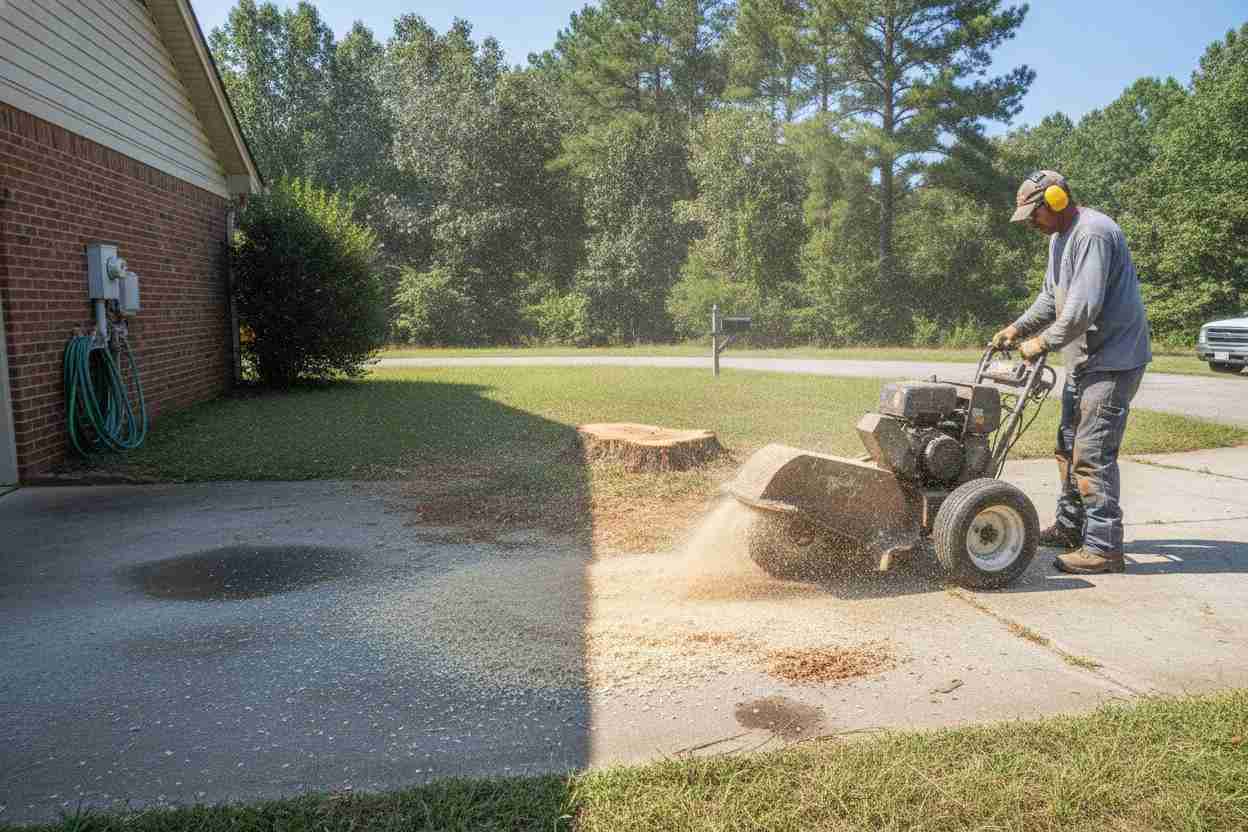
Maintenance Signs Homeowners Should Watch
A stump doesn’t always stay the same size and shape, and that’s where people get surprised. One week it’s a flat cut, the next it’s cracked, soft, and crumbling around the edges, especially if it sits in a shaded corner of the yard. When you notice it getting punky, wood decay is already working and the surface can get unpredictable underfoot. That’s when it goes from ugly to risky, especially if you’ve got kids cutting across the yard.
Watch what the ground does around the stump, not just the stump itself. If the soil is sinking or feels bouncy at the edge, voids can form as roots rot and shrink, and soil settling can create ankle-twisting dips that keep getting worse. Those low spots also hold water, which turns mowing into a muddy drag and keeps grass thin. Proper grinding paired with smart cleanup helps you rebuild a stable, level surface.
Sometimes the clearest sign is the one you feel in your hands when you’re mowing. If you’re always steering around that spot, snapping trimmer line, or nicking blades, that’s your yard telling you mower damage is next if it hasn’t already happened. The jolt from a hidden edge can stress belts and spindles, not just the blade. If the stump sits near a driveway edge off Pelham Rd or close to a walkway, it’s also a trip hazard for guests who don’t know it’s there.
- Cracks, softness, and crumbling edges point to rot getting worse
- Sinking soil or bouncy ground can signal voids from root breakdown
- Repeated mower and trimmer hang-ups mean it’s time to deal with it
Simple Checks That Can Reduce Future Problems
You don’t have to be an expert to get a better handle on what you’re dealing with. Start by looking at where the stump sits compared to what matters: fences, sheds, irrigation, and the route you take when you mow. If you see surface roots or a wide base, that’s a clue the root spread may push the grind area wider than you expected. Noticing that up front helps you plan for repairs, seeding, or a clean finish without surprises.
Next, think about access, because stump grinders aren’t magic and they don’t teleport into backyards. If the stump is behind a narrow gate, along a tight side yard, or tucked between landscaping, we need to plan equipment access so the right machine shows up and the yard doesn’t get chewed up getting to the work. Homes near spots like Greer City Park often have sidewalks, parked cars, and tight staging, so a quick look at where we can safely set up matters. If you can clear a simple path and point out anything you know is underground, it helps the job go smoother.
Finally, decide what you want the area to become after the stump is gone. If you want grass, the spot needs to be leveled and topped with clean soil, and if you want to plant again, you usually don’t want to set a new tree right into a pocket of grindings because backfill planning affects stability. We can leave grindings for you to reuse as mulch in non-planting areas, or we can remove material depending on your goal. Having that end goal in mind keeps the result from feeling half-finished.
- Look for surface roots and a wide base that may require a wider grind
- Confirm gate width and obstacles so access is planned, not improvised
- Decide whether you want grass, planting space, or a clean level patch
When Professional Service Is the Safer Choice
There’s a reason stump grinding isn’t a casual weekend rental for a lot of homeowners. These machines have serious torque, they throw chips, and they can buck if you hit the wrong angle or hidden hardware in old wood. A professional plan builds in jobsite safety from the start, including where debris will go and how we’ll protect nearby windows, vehicles, and foot traffic. If your stump is close to where people walk or play, that safety planning isn’t optional.
Stumps near utilities and hardscape are where things get tricky fast. If the stump sits close to a water line, a drainage run, or shallow electrical for landscape lighting, grinding without a plan can turn into a repair job, and utility awareness is a big part of doing it responsibly. We’ll talk through what you know about the yard and what you want to avoid, and we’ll work in a controlled way that respects those limits. If there’s uncertainty, we slow down and choose caution over speed.
Professional service also matters when the stump is large, old, or boxed in by obstacles. Bigger stumps take more time, make more chips, and can have a wide flare that changes the footprint of the work, and grind depth decisions affect what you can do with the area afterward. We’ll explain what’s realistic for your property, because deeper isn’t always smarter if you’re not changing the grade. You should walk away knowing what we did, why we did it, and what to do next.
- Pros manage chip throw, machine control, and protection for nearby property
- Work near utilities and hardscape requires careful planning and restraint
- Large or obstacle-packed stumps benefit from experienced judgment
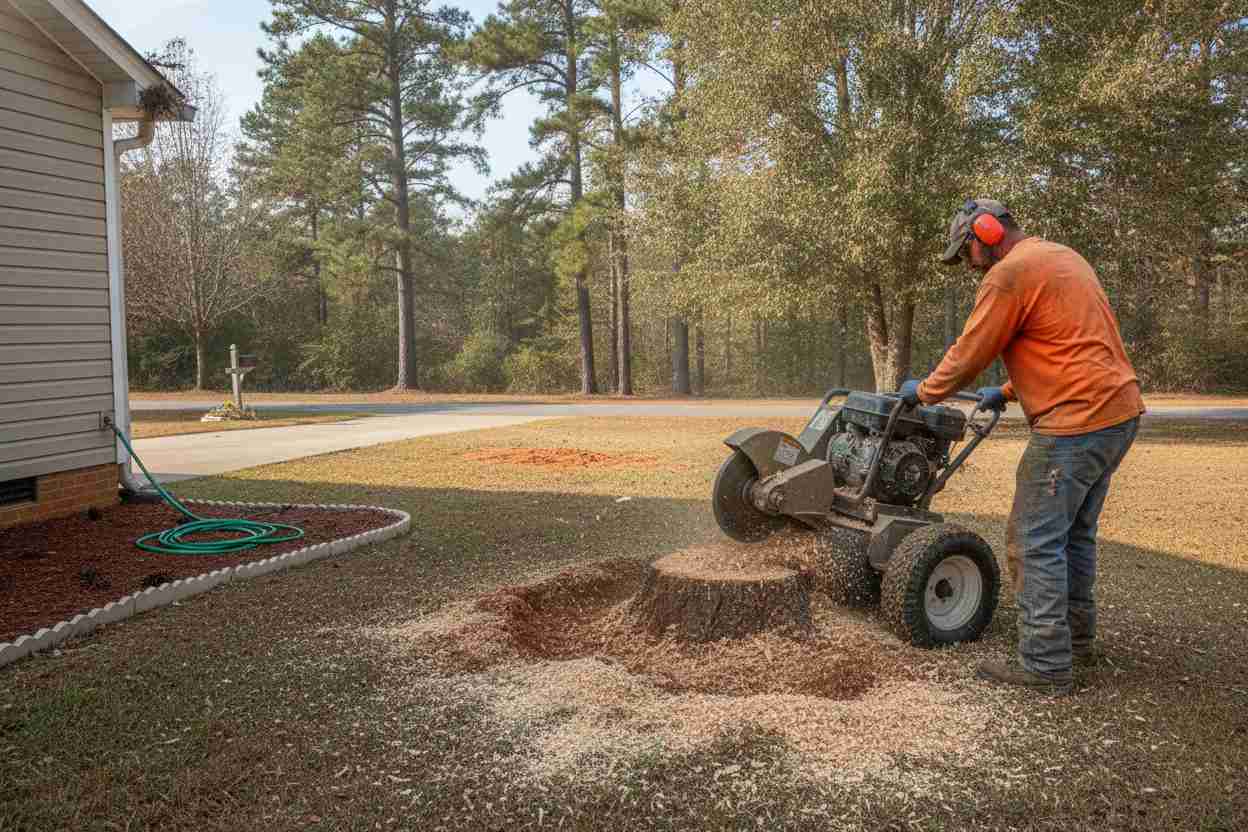
Types Of Projects We Do
Most calls start the same way: a tree came down and the stump got left behind, or a stump’s been ignored for years and it finally became a problem. With Stump Grinding in Greer, SC, we handle the common situations homeowners run into, from front-yard stumps that ruin curb appeal to backyard stumps that block how you use the space. The exact scope depends on size, access, and what’s around it, and a quick site assessment keeps it straightforward. We’ll tell you what we can do cleanly and what needs a little prep.
We also help when you’re trying to finish a yard improvement and the stump is the last thing in the way. If you’re planning fencing, a garden bed, a play area, or you just want a smooth run for mowing, then yard leveling becomes the real goal, not just removing wood. Sometimes that means grinding below grade and leaving a clean, workable spot for topsoil, and sometimes a modest grind is enough if you’re keeping the grade the same. We match the grind to your plan so you’re not paying for work you don’t need.
Tight and high-visibility areas are common too, especially near walkways, drive edges, and close to the house. In those spots, careful positioning matters and we take extra steps for surface protection when we’re near things like edging, pavers, and landscaping you’ve put time into. We’ll talk through where chips will land and what cleanup will look like so it doesn’t feel like a surprise. The end result should look intentional, not like a rough patch you now have to hide.
- Fresh stumps after tree removal that need to go below grade
- Old stumps causing settling, mowing trouble, or space limitations
- Stumps near walkways, drive edges, fences, and landscaping features
Environmental and Safety Regulations That Apply
Stump grinding is yard work, but it still comes with real responsibilities for cleanup and disposal. In Greenville County, vegetative debris needs to be handled the right way, and yard waste decisions matter if you’re planning to haul chips or leftover wood off site. We’ll talk through whether you want grindings left on site, moved to a different area, or removed, because each option changes the finish and sometimes the timeline. The goal is to leave your property clean and avoid shortcuts that create a bigger problem later.
Safety is also part of the job even when it’s just one stump. Grinding creates flying chips, loud equipment noise, and a work zone that shouldn’t have people walking through it, and solid work zone control is how we keep it predictable. If the stump is near the street or close to a sidewalk, we plan the grinder position and chip direction so we’re not blasting debris toward cars or pedestrians. Homeowners help a lot by keeping kids and pets inside and giving us a clear lane to work.
If you’re thinking about burning stump leftovers or brush, it’s worth checking official guidance instead of going off neighborhood advice. South Carolina provides direction about outdoor burning conditions and restrictions, and burning rules can change based on location and conditions. You can review the current guidance at South Carolina burn ban information before you decide what to do with debris. We’re not here to lecture anybody, we just want you to avoid a decision that turns a stump problem into a safety problem.
- Plan debris handling ahead of time so cleanup matches your goals
- Control the work area to protect people, pets, and nearby property
- Check official guidance before burning any yard debris
Our Approach to Reliable Long-Term Results
Good stump grinding is mostly about expectations and follow-through. At Drop-a-Top Tree Service, we treat each yard like its own little puzzle, because access, grade, and nearby features change what makes sense. We start by walking the area with you and getting clear on your plan for the space, and clear communication keeps the scope from drifting. If something changes once we see the stump up close, you’ll hear it from us before the machine starts.
Our process is simple, but it’s not sloppy. We set up for stable control, keep the work area contained, and grind to the depth that fits what you’re doing next, and controlled grinding is what keeps the finish from looking chewed up. We also talk about what you want done with the grindings, because leaving a big mound in a hole isn’t the same as leaving an area ready for grass. You’ll know what to expect when we’re done, including what settling can happen and what the next step should be.
Experience shows up in the details you notice later. We pay attention to grade, drainage, and how the surrounding ground is going to behave, and finish grading is often the difference between a neat result and a low muddy pocket that keeps coming back. We’ve been doing this work for 10 years, and we’ve learned homeowners don’t just want the stump gone, they want their yard back. That’s what we aim for every time we roll a grinder onto a property.
- We align grind depth and cleanup with what you want to do next
- We focus on control and a clean finish, not just speed
- We explain the aftercare so the spot doesn’t turn into a dip later
If you’ve got family over in another part of the county and they’re dealing with the same kind of yard obstacle, we keep things consistent across service areas. A helpful next step for that situation is our page on Stump Grinding in Easley, SC, which lays out the same practical expectations about access, cleanup, and what to do with grindings afterward. The goal is the same anywhere: remove the hazard and leave the yard ready for whatever comes next. That kind of service consistency matters when you’re trying to plan improvements without surprises.
Local Service FAQs
How deep do you typically grind a stump?
Most homeowners want the stump ground below the surface so they can level and grow grass back without hitting wood later. We usually talk through your end goal first, because grind depth depends on whether you’re reseeding, changing grade, or placing something like pavers. If you just want a safer, mowable yard, you often don’t need to chase extreme depth everywhere. We’ll explain what makes sense for your spot before we start.
What happens to the wood chips after grinding?
Grinding produces a mix of chips and soil, and you’ve got a couple options depending on the finish you want. Some folks like leaving grindings to spread in a non-planting area, while others want material removed so the spot can be topped with clean soil, and chip cleanup is part of that conversation. We’ll be upfront about what your choice means for settling and the final look. Either way, you shouldn’t be left staring at a mountain of chips with no plan.
Can you grind a stump close to a sidewalk or driveway?
Yes, but we treat those as precision jobs because hard edges and public paths raise the stakes. When we do Stump Grinding in Greer, SC near walkways or drive edges, we set the machine and the work zone so chip throw and contact risks are controlled, and surface protection is a priority. We may adjust the approach based on how tight the space is and what you want preserved. If there’s something you’re worried about, we’d rather talk it through than rush it.
Will the ground sink where the stump was?
Some settling can happen over time because roots and leftover organic material continue to break down underground. The best way to reduce it is proper grinding, reasonable cleanup, and topping the area with soil as needed, and soil settling is something we’ll explain in plain terms. If you’re planning sod or a smooth lawn finish, we’ll tell you what to watch for after the work is done. It’s not complicated, but it helps to know what’s normal.
If you’re ready to stop stepping around that stump and start using your yard again, we’ll keep the process simple and clear. Stump Grinding in Greer, SC should feel like a clean fix, not a confusing project that leaves you guessing about the finish. We’ll look at access, what’s nearby, and what you want the space to become, then we’ll explain the plan before any equipment fires up. When we’re done, you’ll have a safer, cleaner spot and a straightforward path to finish it out with yard restoration in mind.