When a tree starts leaning over your roofline or dropping heavy limbs into the yard, it stops being a weekend chore and turns into a real safety problem. If you are searching for Tree Removal in Taylors, SC, you are probably staring at the issue right now and listening for that next crack in the wind. Around Taylors, SC, we see this a lot on lots with tight driveways and fenced backyards along Wade Hampton Boulevard, Brushy Creek Road, and around the North Greenville University area where space is limited. The smart move is to get eyes on it before it turns into a hole in the roof. In that moment, tree removal is about control, not luck.
Why Preventive Service Matters
Most removals do not start with a tree that is obviously dead, they start with a change you can see from the porch. When the structure is compromised, the tree does not get stronger with time, and gravity keeps doing its thing every day. In our work, a lot of hazard trees still look green up top, but they have hidden rot, old break points, or root problems that only show up once the wind loads the canopy. Taking care of it early usually means a simpler plan and fewer surprises once cutting starts. It also helps you avoid that miserable feeling of not letting kids or pets play in the yard because the tree feels unpredictable.
In Taylors, a common trigger is a tree that has simply outgrown the space and is now fighting with the house, the driveway, or the service drop to the home. Even if the tree is alive, constant rubbing on shingles and gutters adds wear, and shade can keep roof areas damp and slick. Once the fall risk goes up, it is no longer about whether the tree looks pretty, it is about whether it can fail into something you cannot afford to fix. Getting it evaluated earlier gives us more options for controlling where each piece goes. That control is what keeps removal from becoming an emergency cleanup.
- Preventive planning reduces surprises once cutting starts.
- Early decisions can keep roofs, gutters, and fences out of the drop zone.
- Small visible changes can point to bigger structural problems.
Maintenance Signs Homeowners Should Watch
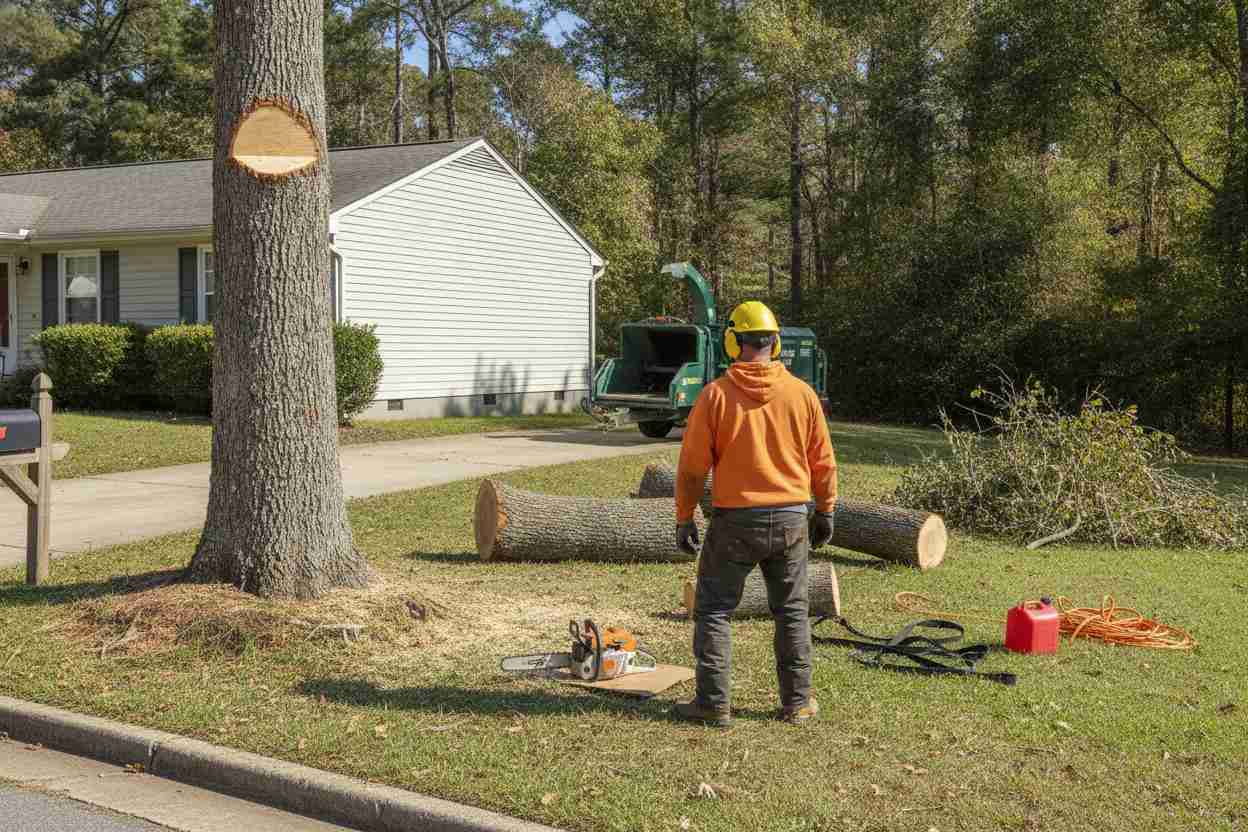
You do not need to be an arborist to notice when a tree is losing the fight. When you see bark sloughing off, mushrooms near the base, or a lean that seems new, your gut is usually telling you something real. A lot of root damage shows up as soil heaving, cracking, or a slight mound on one side of the trunk where the root plate is shifting. Those signs matter more after a soaking rain, because wet soil lets weakened roots move. If the ground looks like it is swelling or tearing, the tree may be telling you it is not anchored like it used to be.
Another big warning is deadwood that keeps showing up no matter how often you clean it up. A few twigs after a breeze is normal, but repeated larger pieces dropping without a big weather event is not. With Tree Removal in Taylors, SC, we often hear folks say the limb hit with a sharp crack that sounded like a gunshot, and that sound is your warning that the wood is failing, not just shedding. When dead limbs hang over a driveway, mailbox area, or sidewalk, the risk is not theoretical, it is about somebody being under it at the wrong second. If you are seeing frequent drop, do not normalize it.
- Look for new lean, soil lifting, and cracks around the base.
- Pay attention to repeated limb drop without a major storm event.
- Watch for bark loss and fungal growth near the trunk flare.
Simple Checks That Can Reduce Future Problems
We are not going to tell you to grab a saw and start guessing, but there are safe checks you can do from the ground. Walk your yard and look at the tree from at least two angles, including from the driveway and from the far side of the yard. One of the easiest things to spot is canopy imbalance where most of the weight is pulling to one side, because that adds leverage on the trunk and roots. If the tree is near a fence line or over a parking spot, that imbalance can turn into a real hazard fast. Even a healthy tree can become a problem if the weight is working against the space it has.
Also look at what the tree is interacting with, not just the trunk and branches. Branches rubbing the roof, skimming gutters, or hanging low over vehicles are real pressure points where damage stacks up slowly. When roof clearance is gone, we commonly see scraped shingles, clogged valleys, and spots that never dry out, which can turn into bigger home maintenance issues. That does not automatically mean removal is required today, but it does mean you should stop treating it like it is not urgent. The tree is already touching things it should never touch.
- Check the canopy from multiple viewpoints for lopsided weight.
- Note branches contacting shingles, gutters, siding, or vehicles.
- Identify what is under the tree that you cannot afford to lose.
When Professional Service Is the Safer Choice
Some removals are straightforward, and some are a straight-up trap for DIY. If there is a house, a fence, overhead lines, or a tight driveway anywhere near the drop zone, the work changes completely. For Tree Removal in Taylors, SC, we regularly deal with yards where there is no safe space to fell the whole tree, so sectional removal becomes the method, cutting in pieces and lowering wood under control instead of letting it crash. That takes coordination, rigging, and a plan that accounts for swing paths and what happens if a limb shifts. When it is done right, the work looks calm, not chaotic.
People also underestimate how heavy wood really is until they try to drag it or it hits the ground. A section that looks manageable can crater a lawn, bounce, or roll into something you care about, especially on sloped ground. When controlled rigging is part of the plan, we are thinking about tie in points, friction, landing zones, and keeping the crew out of pinch points before the saw ever starts. That planning is what keeps the work predictable around driveways, patios, and landscaping. It is also what keeps a removal from turning into a repair bill.
- Hire a pro when the tree is near roofs, fences, overhead lines, or tight edges.
- Piece by piece work reduces collateral damage on crowded lots.
- Rigging plans control swing, drop, and landing zones.
Types Of Projects We Do
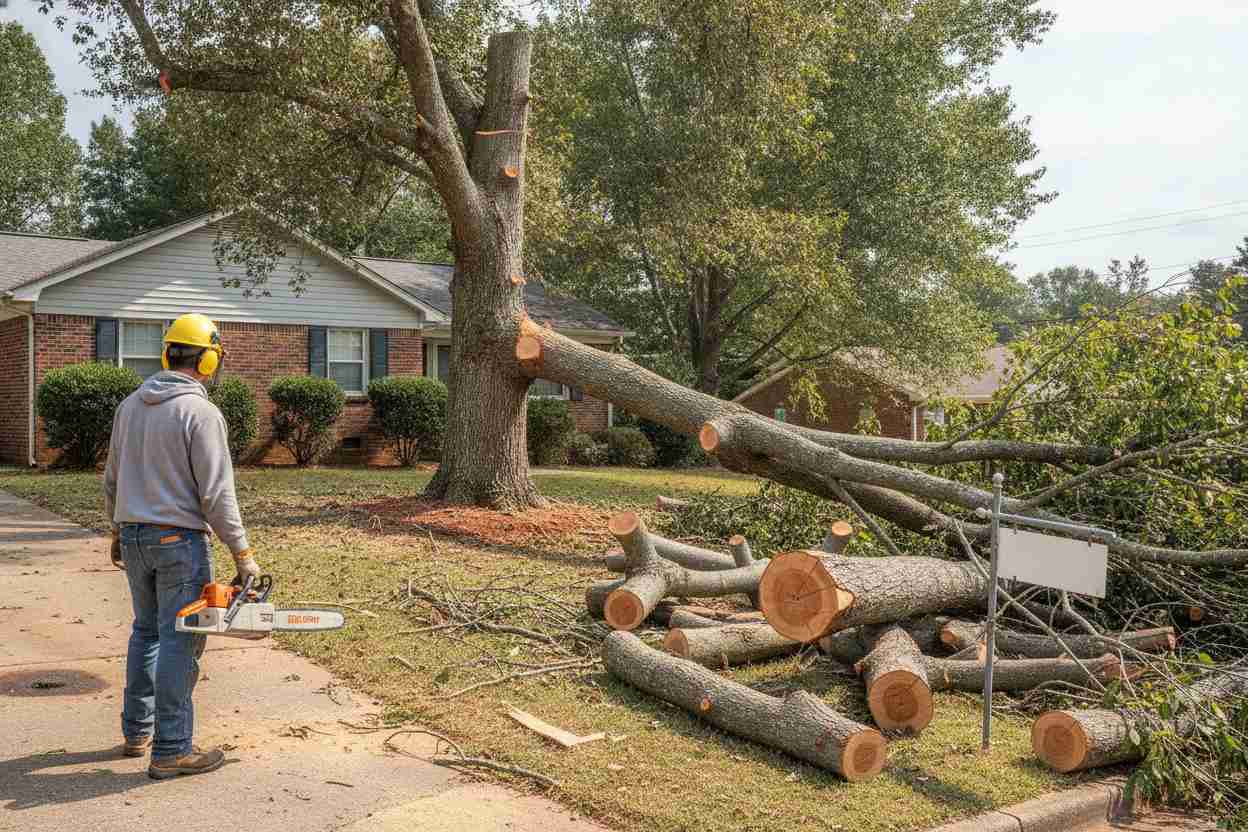
Tree removal is not one size fits all, and most jobs have a complication hiding in plain sight. Sometimes the tree is dead and brittle, other times it is alive but unsafe because of lean, root issues, or poor structure. With full removals, we are taking the tree down to the stump height and managing the debris so you are not left with a yard full of scattered brush and chunks. We also handle removals where the tree must come down in tight quarters and every cut has to be deliberate. If the tree is boxed in by a house, fence, and driveway, we treat it like a controlled dismantle.
We also get calls for trees that are creating property conflicts even when they are not fully dead. Limbs over roofs, trunks too close to foundations, and canopies pushing into fences are common reasons people decide it is time. In those cases, risk reduction is the goal, removing the threat and getting your usable space back without tearing up everything around it. We talk through access, where equipment can and cannot go, and what you want done with the wood afterward. Clear expectations make the whole day go smoother.
- Dead, dying, or structurally compromised removals with cleanup.
- Tight space removals near homes, garages, fences, and driveways.
- Problem trees causing roof contact, overhang hazards, or conflicts.
Environmental and Safety Regulations That Apply
Even when a tree is on your property, there are safety rules that still matter, especially around electrical hazards. If a tree is close to overhead lines, the safest approach is to treat that whole area like a no mistake zone and plan accordingly. For homeowners, power line work is not a place to experiment, because contact can injure people and disrupt service. We will explain what is in our scope and what may require coordination with the utility depending on how close the limbs and trunk are. If we cannot make it safe, we will tell you that plainly.
There is also the practical side of keeping the jobsite safe for neighbors, vehicles, and anybody who might walk up while work is happening. A removal creates flying chips, falling pieces, and trip hazards if the work area is not controlled. In Greenville County, jobsite control means setting clear boundaries, staging debris in smart spots, and keeping drive lanes and sidewalks as open as possible while the work is underway. That is not red tape, it is just being responsible in a residential area. It also keeps the work calmer and more efficient.
For basic safety guidance, we stick to the same common sense principles you will see in national safety resources, especially around saw handling and kickback risk. Homeowners can review the CDC resource on chain saw safety, which lines up with what we see in the field about fatigue, unstable footing, and rushing cuts. The chain saw is not forgiving, and most injuries happen during avoidable moments when a person is overreaching or cutting above shoulder height. You can read that guidance here: CDC guidance on chain saw safety. Even if you never touch a saw, it helps you understand why we set boundaries and slow things down when needed.
- Trees near overhead lines require special precautions and planning.
- Safe work zones reduce risk to neighbors, vehicles, and bystanders.
- National safety guidance supports controlled cutting and strict boundaries.
Our Approach to Reliable Long-Term Results
We have been doing this for 10 years, and the big lesson is that homeowners do not just want the tree gone, they want the stress gone too. That starts with showing up, reading the site, and explaining what we see in plain language without talking over your head. A solid removal plan covers access, drop zones, what gets hauled away, and what the yard will look like when we roll out. If something is uncertain until we get closer, like hidden cavities or weak unions high in the canopy, we say that up front. Clear communication beats surprises every time.
We also stay practical because real properties are full of obstacles. You might have a narrow gate, a sloped backyard, a patio you want protected, or landscaping you do not want crushed. With property protection in mind, we plan equipment routes, staging areas, and controlled lowering so wood does not swing into what you care about. We will also be honest about what can happen to turf in the work zone, because heavy sections and foot traffic can leave marks. The goal is to keep impact predictable and limited, not pretend there will be none.
If you are comparing companies, listen for who talks about safety and logistics instead of just speed. Fast is fine, but controlled is what protects your home and keeps cleanup reasonable. For Tree Removal in Taylors, SC, we focus on doing it clean and predictable, including what happens with brush, logs, and the stump situation after the tree is down. A good cleanup service means you are not left with a weekend of dragging limbs to the curb. We are there to solve the problem, not hand it back to you in a pile.
- Clear scope discussions about access, drop zones, and cleanup.
- Planning focused on protecting lawns, fences, driveways, and landscaping.
- Controlled cutting prioritized over rushed shortcuts.
If you have a second property or family that needs help outside the immediate area, it can be useful to see how the same process works in a different layout. You can look at Tree Removal in Hendersonville, NC to compare how access, slopes, and obstacles change the removal plan while the safety basics stay the same. When you understand the service scope ahead of time, it is easier to know what to ask and what a good plan should include. That clarity usually reduces hesitation because you can picture the steps. Then you can make a decision based on risk, not guesswork.
Local Service FAQs
How do you decide if a tree needs removal or can be kept?
We start with what you can see from the ground, like lean, canopy thinning, deadwood, trunk cracks, and root zone changes, and we connect those symptoms to likely structural issues. In many cases, a proper tree inspection is about seeing patterns rather than reacting to one limb that broke. If keeping the tree is realistic, we will say so, and if removal is the safer call, we will explain why in plain language. Either way, you will know what we are basing the recommendation on.
What usually makes a removal more difficult on a residential lot?
Obstacles change everything, like tight gates, fences, sheds, driveways, and overhead lines, because they eliminate a clean drop zone. When there is no safe place to fell the whole tree, tight access typically means piece by piece removal with rigging to control swing and landing. We will walk you through staging, where debris will go, and what areas need to stay clear. That is how we keep the job controlled instead of chaotic.
Do you haul away the wood and brush?
Most homeowners want the mess gone, and we can include that in the scope based on what you want to keep. We will confirm expectations for logs, brush, and chips, because debris removal can mean full haul off, leaving firewood length pieces, or a mix. The key is agreeing on it before we start so the end result matches what you pictured. We would rather be clear up front than assume.
How long does Tree Removal in Taylors, SC usually take?
Time depends on access, how close the tree is to structures or lines, how much rigging is needed, and what cleanup you want afterward. A straightforward job can move quickly, but a tight yard with piece by piece work takes longer because sectional cutting is slower by design. We will give you a realistic expectation once we see the site and understand the obstacles. We also plan the work so you are not blocked in longer than necessary.
If you are dealing with a leaning tree, dropping limbs, or a trunk that is too close for comfort, you do not have to guess your way through it. We will look at the site, explain the risks we see, and lay out the safest way to take it down without turning your yard into a disaster zone. When you are ready to move forward with Tree Removal in Taylors, SC, Drop-a-Top Tree Service will keep it practical, controlled, and clear from start to finish. The goal is simple: remove the threat and let you breathe again. Reach out through the website to get the next step started.