When a tree starts leaning toward the roof or you hear limbs popping in the wind, it gets your attention fast. Tree Removal in Travelers Rest, SC is usually on your mind right after you spot cracked bark, lifted roots, or a dead top hanging over the driveway. In Travelers Rest, it’s common to see tight yards, overhead lines, and landscaping that you really don’t want crushed. We handle the messy, risky part with a plan that keeps people and property in one piece. Our tree removal work focuses on safe control, clean drop zones, and clear communication from start to finish.
- Fast assessment of obvious hazards like lean, root lift, and dead tops
- Practical options when space is tight near homes, fences, and driveways
- Clear next steps so you’re not guessing what happens after it’s down
What Tree Removal in Travelers Rest, SC Involves and Why It Matters
Tree removal isn’t just cutting until gravity does the rest, because gravity doesn’t care what’s underneath. Most of the time, real hazard trees show a few warning signs first, like mushroom growth at the base, a fresh soil hump where roots are lifting, or a trunk seam that opens after a storm. When those signs show up, the tree’s holding power can already be compromised, even if it’s still green. Around places like U.S. 25 and Highway 11, we also see roadside and driveway trees that look fine until the lean starts, and then it becomes a timing problem.
Tree Removal in Travelers Rest, SC also means thinking about what the tree can hit on the way down and what it can hit while we’re taking it apart. In the second step of planning, we build a drop zone plan that accounts for patios, sheds, fences, and the one thing nobody remembers until it’s too late: the neighbor’s side of the line. If there’s not enough open space, we don’t guess, we remove it in controlled pieces and rig sections down. That’s slower than a wide-open fell, but it’s how you avoid roof dents, busted gutters, and broken plants.
A lot of homeowners wait because the tree still looks decent from the street, but hidden issues are the ones that surprise you. If a tree’s over the house, the driveway, or a play area, risk reduction becomes the whole point of the job, not just cleanup. Removing the tree at the right time can prevent a chain reaction of repairs, like crushed fencing, driveway damage, and water intrusion after roof impact. We’d rather take it down on your schedule than meet it after it fails.
- We look for lean, root movement, decay pockets, and dead canopy sections
- We match the method to the space, obstacles, and target areas below
- We focus on controlling the tree, not just getting it on the ground
Our Step-by-Step Process for Tree Removal in Travelers Rest, SC
The first step is walking the site with you and looking up, down, and around, not just at the trunk. We’ll talk through the obvious concerns and then check access for equipment, because job planning starts at the gate, not at the stump. If we’re near overhead utilities, structures, or tight property lines, we’ll choose a removal style that keeps every cut predictable. You’ll know what’s getting removed, where material is going, and what the yard will look like when we’re done.
Next, we prep the work area so we’re not scrambling while a piece is hanging. That includes setting up safe work zones and protecting what matters, because property protection isn’t optional when there are walkways, gardens, or a narrow driveway in the way. We also decide where limbs and wood will be staged so traffic and foot paths stay clear. If we need to move brush through a side yard, we plan that route so fences and gates don’t take a beating.
During removal, we either fell the tree in one controlled direction or dismantle it top-down in sections. When there’s no clean fall path, sectional removal is the safe route, and we’ll rig pieces down so they don’t swing into the house or bounce through a fence. After the tree is down, we cut and stack or haul material depending on what you want, then rake and blow off the area. We’ll also point out any nearby trees that have similar issues, so you’re not dealing with the same problem again next month.
- Site walk and plan based on targets like roofs, lines, fences, and driveways
- Work zone setup, protection steps, and a clean staging plan
- Controlled cutting, safe lowering, and thorough cleanup afterward
Tools, Materials, and Methods We Consider
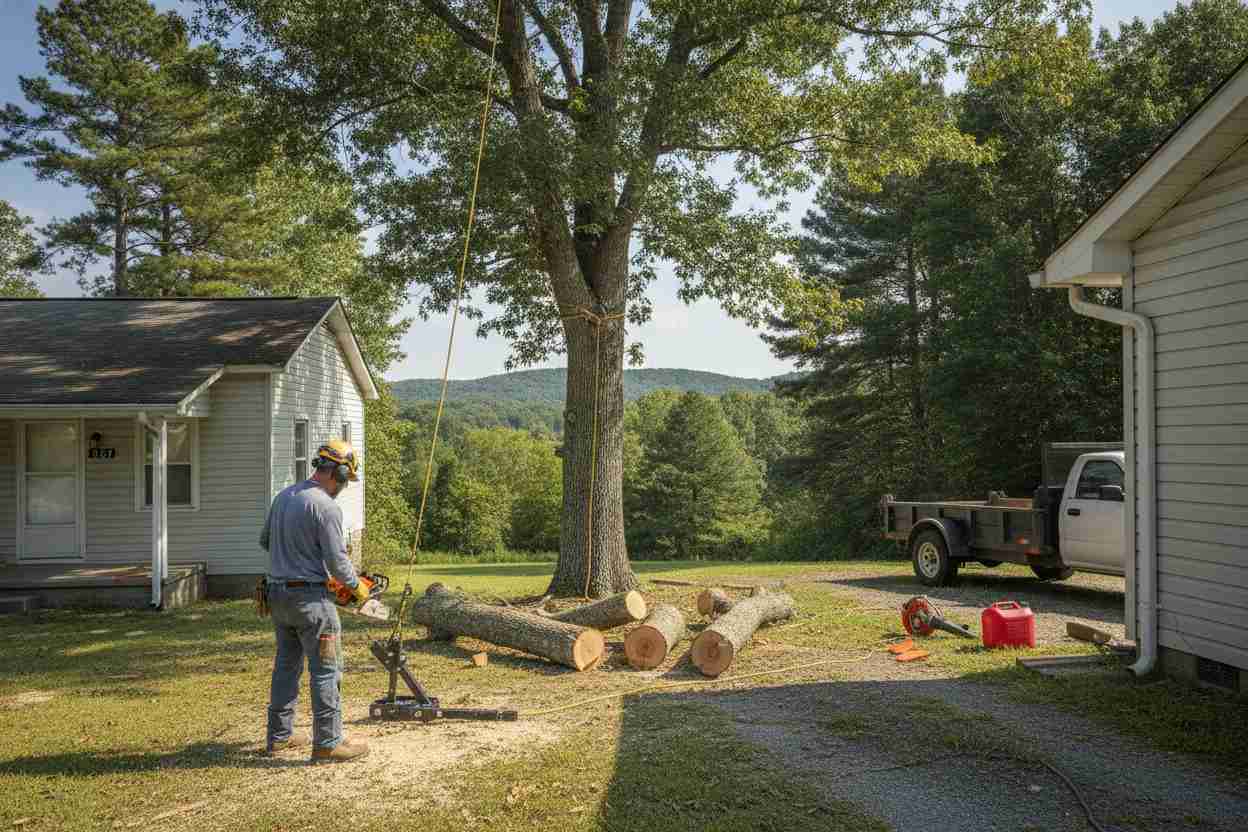
Different trees and different yards call for different setups, and we don’t pretend one approach fits every property. A tall hardwood over a roof needs controlled rigging, while a smaller tree with clear space might be safely felled, and choosing the right rigging systems makes the difference between smooth and sketchy. We also pay attention to ground conditions so equipment doesn’t rut the yard or get stuck halfway through. If access is limited, we’ll adjust methods to keep the work safe without turning your lawn into a construction site.
Cutting strategy matters just as much as the gear, especially when the tree’s compromised. We look for cracks, hollow spots, and heavy side weight, because cut control prevents barber-chair splits and sudden shifts while we’re working. When we’re piecing a tree down, we set our tie-in points and lowering angles so limbs don’t pendulum into windows or railings. It’s not about being fancy, it’s about keeping every piece predictable from cut to landing.
Once the tree is down, the question becomes what you want done with the wood and what your access allows. We can chip brush and manage debris, and if stump work is part of your plan, we’ll talk about it separately because stump grinding is its own scope and depends on utilities, soil, and your future landscaping. If you want firewood lengths, we can usually cut to manageable rounds, but we’ll be honest about what’s realistic in tight spaces. The goal is to leave you with a yard you can actually use, not a pile you have to stare at for weeks.
- We match tools and technique to height, lean, and available landing space
- We use controlled lowering when targets below can’t be risked
- We plan debris handling based on access, gates, and your preferences
Timeline Factors That Can Change the Work
Some removals are straightforward, and others turn into a careful, piece-by-piece operation once we see the full layout. The biggest timeline driver is usually access, because equipment access dictates whether we can stage close to the tree or if everything has to be carried out through a narrow side yard. Fences, steep grades, and landscaping beds slow the movement of brush and wood more than most people expect. We’ll explain what that means before we start so you’re not surprised by how long the cleanup takes.
Tree condition can also change the pace, especially when the wood is brittle or the trunk is compromised. A dead tree can shed limbs unexpectedly, and decay can make holding wood unreliable, so structural defects force a slower, safer cut sequence. If we find significant rot at the base, we may adjust the plan away from a single fell and toward dismantling to keep the trunk from failing early. That’s one of those situations where caution isn’t a preference, it’s the job.
Obstacles in the strike zone are another big variable, and that’s common in Travelers Rest properties where trees are close to driveways, patios, and utility drops. When we’re working around wires or near a home, precision removal takes time because we’re controlling each section, not letting it free-fall. We also factor in where the truck and chipper can safely sit, especially on tighter roads and drive approaches. The more we can plan the flow, the smoother and faster the job runs.
- Access, grade, and gate width often dictate the pace more than the cutting
- Dead, brittle, or decayed trees require slower, controlled sequencing
- Nearby structures and overhead lines increase the need for precision work
Types Of Projects We Do
Most folks call us when a tree becomes an immediate concern, but removals come in a few common categories. Sometimes it’s a tree that’s already failed partway, and sometimes it’s a leaning tree that’s clearly headed in the wrong direction, and knowing the removal scope helps you understand what you’re paying for. We handle both simple removals and complex, tight-space removals where everything has to be lowered carefully. If you’re not sure whether you need removal or just trimming, we’ll talk it through on-site and explain the risks either way.
We also remove trees that are damaging property even if they haven’t fallen yet. If roots are lifting a walkway, pushing a retaining edge, or cracking a driveway, the root damage is usually a sign the tree’s outgrown the space. In those cases, removal is often part of preventing more costly repairs, not just aesthetics. We’ll also point out nearby trees that could cause similar issues so you can plan ahead.
Another common situation is a tree that’s too close to structures, especially when branches are over the roofline or rubbing siding. Over time, that contact can scrape roofing, clog gutters, and create access points for pests, so roof clearance can be a safety and maintenance decision, not just a looks decision. When a tree is boxed in by a fence or a small backyard, we’ll dismantle it in sections to keep impact off the property. You’ll get a straightforward explanation of what has to happen and why.
- Leaning or storm-damaged trees that pose an immediate hazard
- Overgrown trees causing root or structural conflicts near hardscapes
- Tight-space removals near homes, fences, and utility areas
What You Can Expect From Drop-a-Top Tree Service
You don’t need a sales pitch when you’ve got a tree problem, you need a crew that shows up prepared and talks straight. With 10 years of hands-on work, we’ve learned that good clear communication prevents most frustrations, so we explain the plan, the order of operations, and what we need from you for access. We’ll tell you if something is going to be loud, if we need to move vehicles, or if a section has to come over a particular area. No mystery, no shrugging, just a clean plan.
We also respect the fact that it’s your property, not a jobsite we can rough up and forget. We build the work around site protection where it makes sense, like staging brush to avoid smothering plants and keeping cutting away from things that chip or crack. We’ll be honest about what we can and can’t prevent, because wood is heavy and sometimes the ground takes a hit, but we’re not careless about it. When we leave, you shouldn’t be hunting debris out of flower beds for the next week.
After the cutting stops, the job isn’t done until the yard is workable again. We focus on job cleanup like raking, blowing, and removing small debris so you’re not stepping on twigs and sawdust every time you walk outside. If you want wood left in a specific spot, we’ll coordinate it so it’s not blocking access or creating a new headache. And if you’ve got questions about what comes next, like replanting or dealing with the stump, we’ll give you practical options without pushing you into extras.
- Clear plan, clear expectations, and a crew that works with control
- Reasonable protection steps for lawns, beds, and nearby structures
- Thorough cleanup so the space is usable again

Local Ordinance & Safety Notes
Before you schedule a removal, it’s smart to think about what’s above and what’s buried, because that’s where homeowners get surprised. If your tree is near overhead utilities, the safest move is to treat it as a utility hazard situation and plan the job around clearance and control. You don’t want anybody guessing near service drops or lines that cross the yard, and you definitely don’t want a DIY cut that shifts the wrong way. We’ll help you understand the limits and the safest approach for your specific setup in Travelers Rest.
It’s also worth remembering that dumping brush or logs in the wrong place can create a whole new problem, especially near creeks, drainage ditches, or right-of-way edges. Proper debris disposal protects your property and keeps you from dealing with complaints or blocked drainage after the fact. If your tree is close to the road, we’ll talk through safe staging so vehicles and foot traffic aren’t forced into a bad spot. Little details like that are what keep a removal from turning into a neighborhood mess.
And here’s the big safety note that applies everywhere, including Greenville County: if you’re thinking about handling a partially down tree yourself, don’t. The CDC has guidance on storm cleanup hazards, and their note on chain saw and debris injuries is a good reality check for what can go wrong fast with loaded limbs and unstable trunks, especially when storm damage is involved. You can read it here: https://www.cdc.gov/disasters/cleanup/facts.html. If you’re not sure whether a tree is under tension or ready to roll, that’s exactly when it’s time to call a pro.
- Be extra cautious around overhead lines and service drops near the home
- Plan debris handling so drainage, roadsides, and access points stay clear
- Avoid DIY cuts on hung-up or partially fallen trees under load
If you’re comparing options or you’ve got a property that sits closer to the city side, it can help to see how we approach the same work in a different setting. Our service coverage includes the broader area, and you can read more about our process and what affects scope here: Tree Removal in Greenville, SC. The details around access, targets, and debris handling are similar, but each neighborhood layout changes the plan. Either way, we’ll walk your site and give you a straightforward recommendation.
Local Service FAQs
How do I know if I actually need removal or just trimming?
A tree that’s rubbing the roof or shading out a yard might only need pruning, but structural issues are a different story. When we see visible decay at the base, major cracks, root lift, or a dead top over a target area, removal is often the safer call. We’ll explain what we’re seeing and what could happen if it stays. If trimming solves the risk without creating new problems, we’ll tell you that too.
What affects the cost of Tree Removal in Travelers Rest, SC?
The biggest drivers are height, lean, and what the tree can hit if it shifts. When we have to rig and lower sections because of structures or lines, the rigging complexity adds labor and time. Access also matters a lot, because moving wood through a narrow side yard takes longer than staging next to the tree. We’ll walk the site and spell out what’s driving the scope so it makes sense.
Will my yard get torn up during removal?
We work to minimize impact, but some yards are soft, steep, or fenced-in, and those conditions are real. Our goal is lawn protection through smart staging, controlled lowering, and careful movement of debris, not reckless dragging. We’ll be upfront about what we can reasonably prevent and where some disturbance is possible. If you’ve got delicate landscaping, point it out, and we’ll plan around it.
How long does a typical removal take?
Some removals are done the same day, while others take longer if the tree has to be dismantled in tight quarters. The amount of site access and the number of obstacles below the canopy decide the pace more than most people expect. We’ll give you a realistic time window after we see the layout and confirm what you want done with the wood. If anything changes once we’re up in the tree, we’ll explain why before we pivot.
If a tree is making you nervous every time the wind picks up, we can help you get back to normal without turning your yard into a disaster zone. We handle Tree Removal in Travelers Rest, SC with controlled cuts, a clear plan, and cleanup that leaves the space usable. The next step is simple: we come out, look at access and targets, and explain the safest approach for your property. Our free estimate process is straightforward, and you’ll know what to expect before any saw starts up.